

Iraq Food Packaging Market Overview
Iraq's food packaging market is valued at approximately USD 2.0-2.8 billion, recovering strongly after years of conflict with growth rates of 8-12% annually. The country's population has grown from 32 million in 2012 to 43 million in 2025, creating sustained demand for packaged food products. Major dairy brands include Al-Safi Danone (joint venture, market leader in Baghdad and southern Iraq), Mawashi (Kurdistan Region), Santal, and several local producers in Sulaymaniyah, Erbil, and Basra. Iraq imports approximately 60-70% of its dairy products, but domestic production is increasing as new processing plants come online. The plastics processing sector is concentrated in Baghdad, Erbil, Sulaymaniyah, and Basra, with approximately 500+ enterprises. Iraq imports virtually all advanced plastics machinery, with Chinese equipment holding an estimated 50-60% market share by volume. PP resin is imported through Umm Qasr port (Basra) and overland via Turkey and Jordan at approximately $1,100-1,400/MT.
Key Specs
- •Iraq's food packaging market is valued at approximately USD 2.0-2.8 billion, recovering strongly after years of conflict with growth rates of 8-12% annually.
- •Iraq imports approximately 60-70% of its dairy products, but domestic production is increasing as new processing plants come online.
- •Iraq imports virtually all advanced plastics machinery, with Chinese equipment holding an estimated 50-60% market share by volume.
Finished yogurt cups — high-speed thin-wall production
Key Opportunities: Yogurt Cup Production Sector
Iraqi yogurt cup formats include 100 ml (single-serve, 4.0-5.5 g), 170 ml (standard local format, 5.5-7.0 g), and 200 ml (family, 6.0-8.0 g) in food-grade PP. Wall thicknesses of 0.42-0.55 mm are standard. The market is transitioning from basic printed cups to IML decoration, led by Al-Safi Danone. Iraq's Kurdish region (Erbil, Sulaymaniyah, Duhok) has a more advanced packaging market than central/southern Iraq, with IML already standard for premium brands. A 4-cavity line on the HMD 270M8-SPV suits Iraqi startup operations at 3,200-4,114 cups per hour. The HMD 400M8-SPV with 8-cavity IML molds serves established brands at 6,400-8,228 cups per hour. Iraq's post-reconstruction economy and young population (median age 20) create significant long-term demand growth. The Kurdistan Region's investment-friendly policies and tax incentives make it particularly attractive for packaging manufacturing.
Import Regulations and Certification Requirements
Injection molding machines enter Iraq under HS code 8477.10.00 with customs duty of 0-5% (varies by current tariff schedule; capital goods often receive reduced rates). A reconstruction levy of 5% may apply. Total landed cost markup is approximately 5-15%. The Kurdistan Region of Iraq (KRI) offers separate, typically lower, duty rates and streamlined import procedures through Ibrahim Khalil border crossing (from Turkey) and Haji Omaran crossing. Food contact packaging must comply with COSQC (Central Organization for Standardization and Quality Control) standards, referencing international frameworks. COSQC certification involves product testing at Baghdad or Erbil laboratories. For the Kurdistan Region, KRSO (Kurdistan Region Standards Organization) provides parallel certification. Payment for Chinese machinery imports typically uses TT (telegraphic transfer) or LC through Iraqi commercial banks (Trade Bank of Iraq, Cihan Bank, Kurdistan International Bank). HWAMDA has established payment processing channels for Iraqi clients.
Key Specs
- •Injection molding machines enter Iraq under HS code 8477.10.00 with customs duty of 0-5% (varies by current tariff schedule; capital goods often receive reduced rates).
- •A reconstruction levy of 5% may apply.
- •Total landed cost markup is approximately 5-15%.
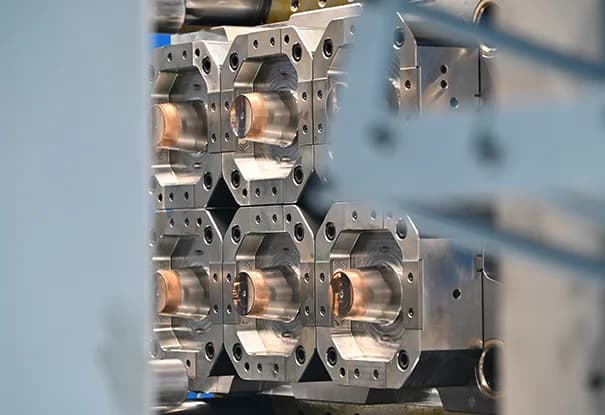
Multi-cavity yogurt cup mold with precision cooling channels
Need Expert Advice?
Talk to our engineers about your specific production requirements. Free consultation.
HWAMDA Equipment Configuration for Iraq
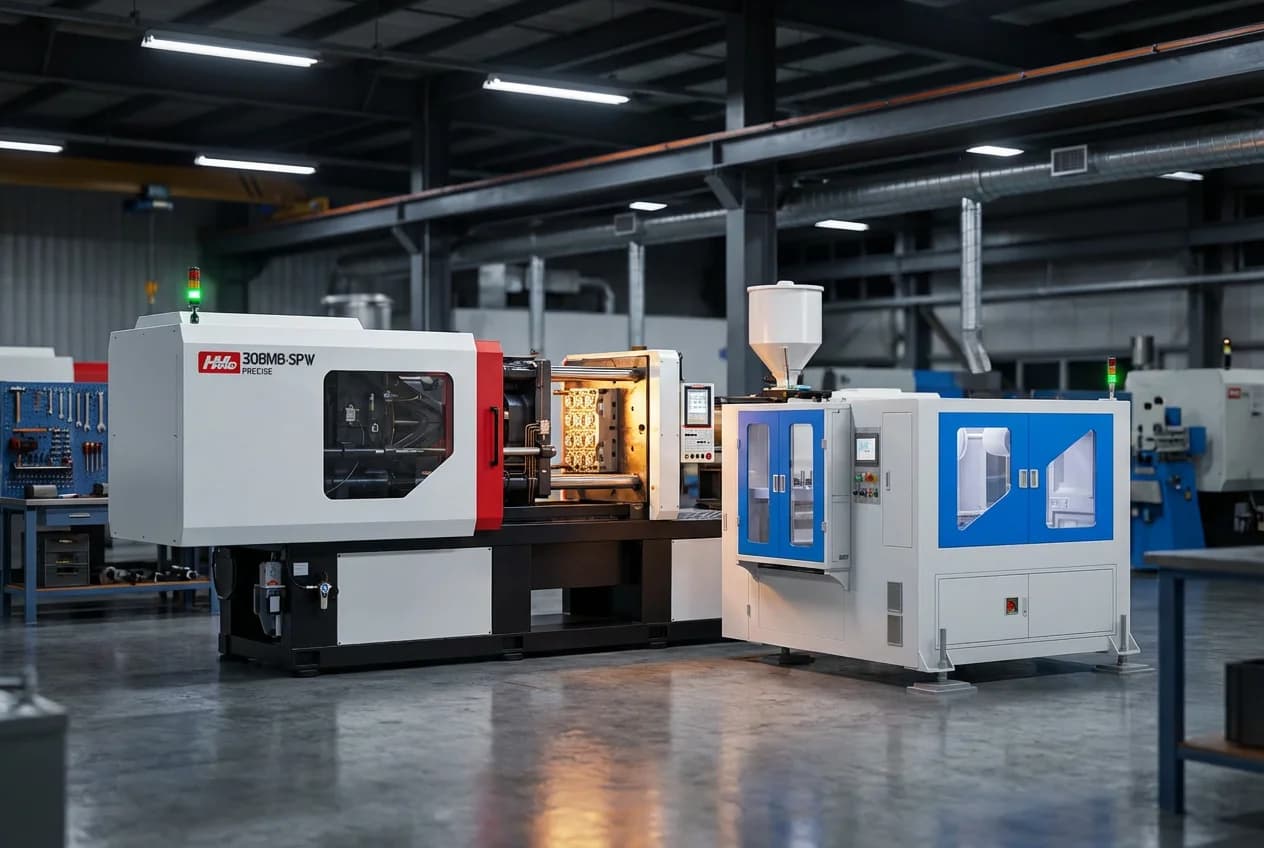
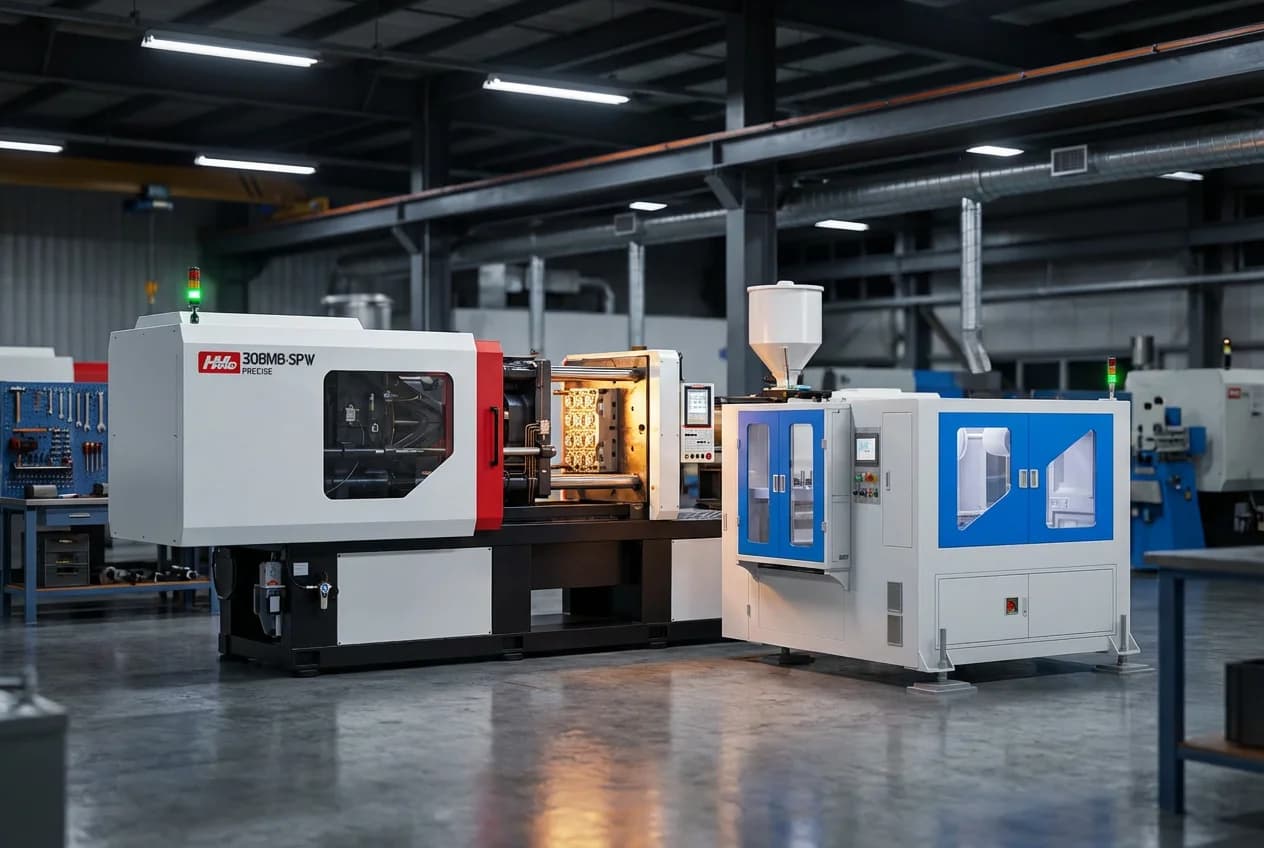
For Iraq's yogurt cup market, HWAMDA recommends the HMD 270M8-SPV (2,700 kN) for 4-cavity molds and the HMD 400M8-SPV (4,000 kN) for 8-cavity IML production. Both models are configured for 400V/50Hz (Iraqi standard). Iraq's extreme summer temperatures (45-50 degrees Celsius in southern regions) require enhanced cooling specifications: upgraded oil coolers, high-capacity water chillers (XC-LF15A with 51.7 kW minimum), and machine cabinet air conditioning. Voltage stabilizers (50-100 kVA) are essential due to Iraq's unreliable power grid; generator backup (150-200 kVA) is strongly recommended for all installations. The INOVA controller provides English and Arabic-compatible interface. Molds use 2344 (H13) steel with YUDO valve gate hot runners designed for 0.42-0.55 mm wall PP cups at 170 ml format. The servo-hydraulic drive system's tolerance of power quality variations makes the SPV5 more suitable for Iraqi conditions than fully electric alternatives.
Logistics and After-Sales Support for Iraq
HWAMDA ships to Iraq via two primary routes. Sea freight to Umm Qasr port (Basra, southern Iraq) takes 22-28 days from Ningbo at $2,500-4,500 per 40ft container, serving Baghdad and southern Iraq. For the Kurdistan Region, the overland route via Turkey (Mersin port to Ibrahim Khalil border crossing) takes 35-42 days total but provides direct access to Erbil and Sulaymaniyah. Alternatively, Jebel Ali (Dubai) transshipment to Umm Qasr adds 3-5 days but leverages HWAMDA's Dubai coordination office. Installation and commissioning takes 5-7 days on-site, with English/Arabic-supported training over 3-5 days. HWAMDA engineers are experienced with Iraqi site conditions including power quality challenges. After-sales spare parts are available from HWAMDA's Dubai warehouse (3-7 days to Erbil or Baghdad via air, 7-12 days via land) or Ningbo (20-25 days to Umm Qasr). Remote diagnostics via WhatsApp are available in English and Arabic.
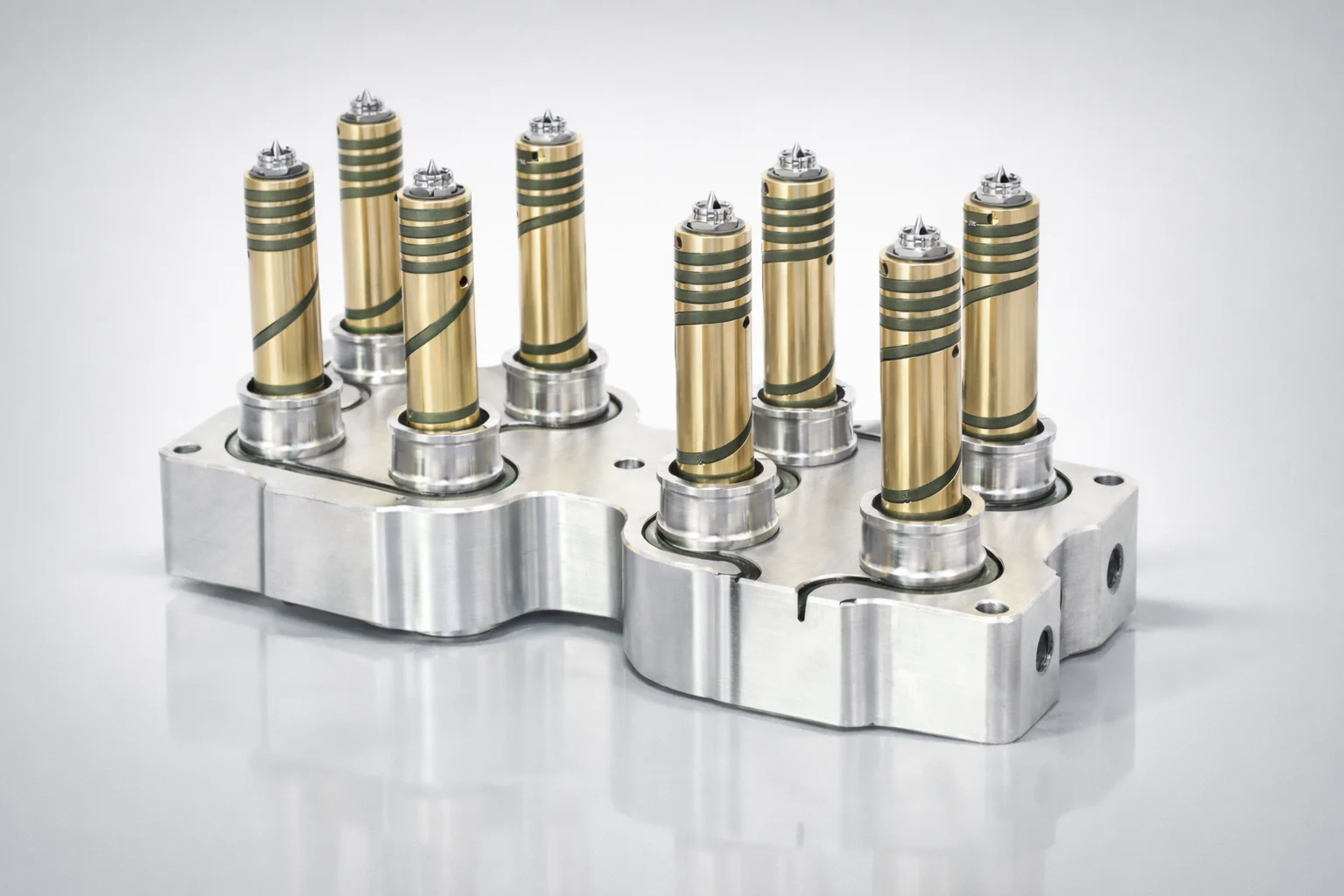
Hot runner system for balanced melt flow distribution
Getting Started: Investment and ROI for Iraq
A complete 4-cavity yogurt cup line for Iraq: HMD 270M8-SPV ($55,000-70,000), 4-cavity mold ($10,000-15,000), SWITEK robot ($12,000-18,000), chiller with tropical package ($6,000-10,000), voltage stabilizer and generator ($8,000-15,000), and shipping ($3,500-6,000). Total: $94,500-134,000. The generator and voltage stabilizer add $8,000-15,000 versus other markets but are essential for reliable production. Operating at 4 cavities, 4.5-second cycles, and 75% OEE (adjusted for Iraqi power conditions), annual output reaches approximately 15 million cups. Material cost at 5.5 g per cup and $1,200/MT PP is $0.0066 per cup. Total production cost is approximately $0.011-0.016 per cup. Iraqi wholesale cup prices range from IQD 40-80 ($0.027-0.054), yielding gross margins of 50-70%. Kurdistan Region investors benefit from 10-year tax holidays under the KRI Investment Law. Payback period is estimated at 14-24 months.
Frequently Asked Questions
Yes, with proper preparation. HWAMDA SPV5 machines use servo-hydraulic drives that are more tolerant of power fluctuations than fully electric machines. For Iraq, HWAMDA specifies a servo voltage stabilizer (50-100 kVA) and recommends a diesel generator backup (150-200 kVA for 270-400T machines). A UPS system protects the INOVA controller during switchover. With these provisions, production reliability exceeds 90% even in areas with 4-6 hours of daily grid interruptions.
Related Guides
Ready to Start Your Project?
Get a free consultation and quotation for your thin-wall packaging production line.
Join 500+ manufacturers in 60+ countries who trust HWAMDA.
Get Free Quote