

Oman Food Packaging Market Overview
Oman's food packaging market is valued at approximately USD 450-600 million, growing at 5-7% annually driven by population growth, tourism expansion, and the government's Oman Vision 2040 economic diversification strategy. The dairy sector is led by Oman Refreshment Company (ORC, Danone franchise), Mazzoon Dairy (majority government-owned, the Gulf's newest large-scale dairy), Al Marai (Saudi-based, major import brand), and Salalah Dairy. Mazzoon Dairy launched in 2021 with a $280 million investment, significantly boosting domestic dairy processing capacity. The Omani government actively promotes industrial self-sufficiency through the Madayn (Public Establishment for Industrial Estates) program, offering subsidized factory plots in Sohar, Barka, and Sur industrial estates. PP resin is imported through Sohar and Salalah ports at approximately $1,150-1,400/MT. Oman's GCC membership provides duty-free access to Saudi Arabia, UAE, Bahrain, Kuwait, and Qatar for domestically manufactured goods.
Key Specs
- •Oman's food packaging market is valued at approximately USD 450-600 million, growing at 5-7% annually driven by population growth, tourism expansion, and the government's Oman Vision 2040 economic diversification strategy.
Finished yogurt cups — high-speed thin-wall production
Key Opportunities: Yogurt Cup Production Sector
Omani yogurt cup formats align with GCC standards: 100 ml (single-serve, 4.0-5.5 g), 170 ml (standard GCC format, 5.5-7.0 g), and 200 ml (family, 6.0-7.5 g). Wall thicknesses of 0.40-0.50 mm are standard. IML is the expected decoration standard for GCC retail markets, with full-wrap labels for brand differentiation. Mazzoon Dairy's new processing facility represents a major opportunity for packaging equipment suppliers, with estimated yogurt cup demand of 100-150 million cups annually from this single customer. A 4-cavity IML line on the HMD 270M8-SPV produces 3,200-4,114 cups per hour, while an 8-cavity line on the HMD 400M8-SPV delivers 6,400-8,228 cups per hour. Oman's GCC trade access means cups produced in Oman can serve the combined GCC market of 58 million consumers without customs barriers, significantly enhancing the investment case.
Import Regulations and Certification Requirements
Injection molding machines enter Oman under GCC Unified Customs Tariff HS code 8477.10.00 with import duty of 5%. No VAT currently applies in Oman (VAT introduction has been postponed). Companies registered in Madayn industrial estates may receive duty exemptions on capital equipment imports. Food contact packaging must comply with GSO (GCC Standardization Organization) standards, specifically GSO 839 (migration limits for plastics food contact) and GSO 1863 (general food packaging requirements). These standards reference ISO 4531 testing methodology with overall migration limits of 10 mg/dm2. SASO (Saudi Standards, Metrology and Quality Organization) conformity certificates are mutually recognized under GCC agreements. HWAMDA provides documentation packages compatible with GSO requirements. Customs clearance at Sohar port is efficient, typically completing in 3-5 business days through Oman's Bayan customs system.
Key Specs
- •Injection molding machines enter Oman under GCC Unified Customs Tariff HS code 8477.10.00 with import duty of 5%.
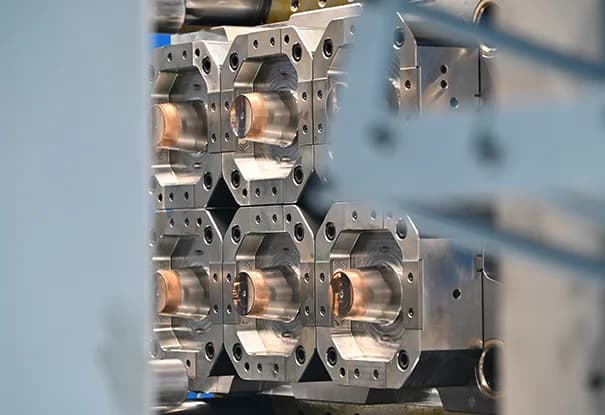
Multi-cavity yogurt cup mold with precision cooling channels
Need Expert Advice?
Talk to our engineers about your specific production requirements. Free consultation.
HWAMDA Equipment Configuration for Oman
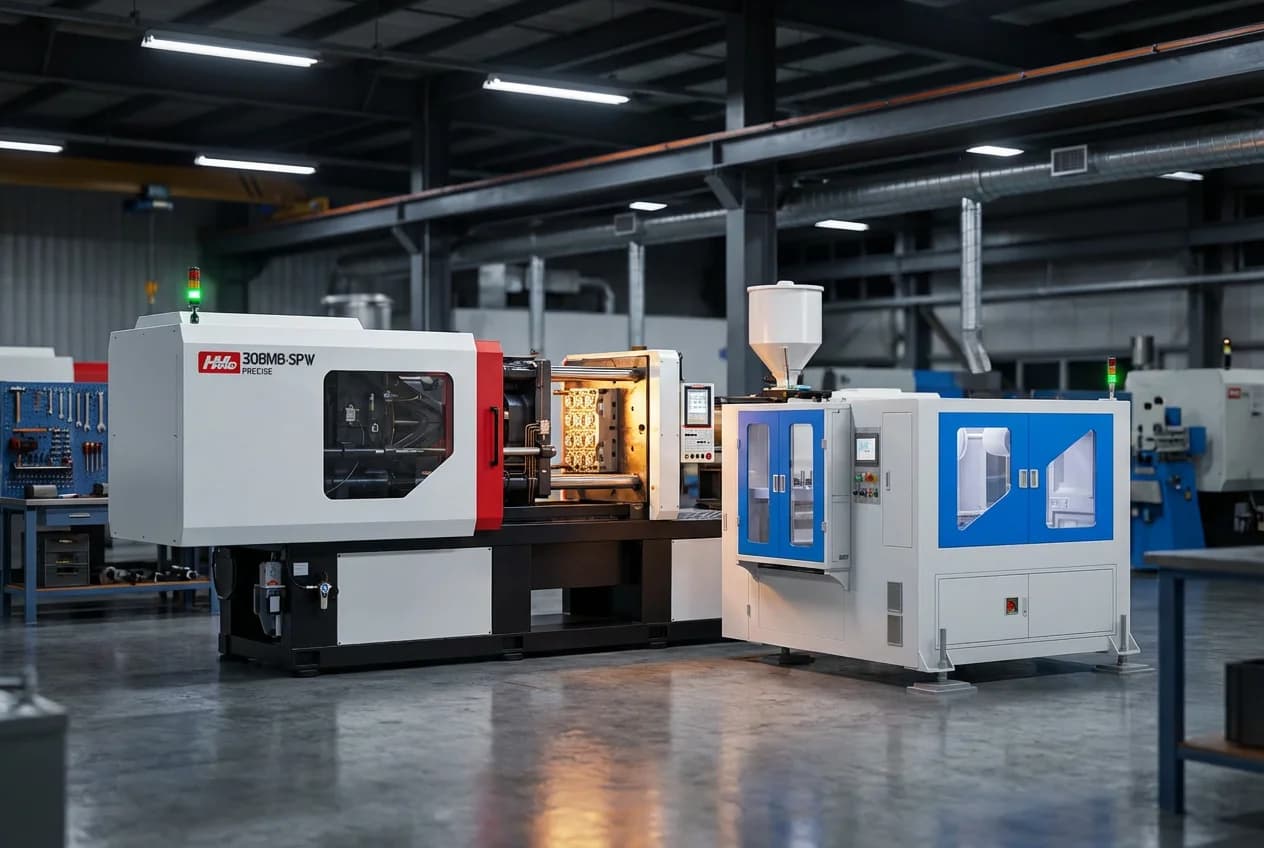
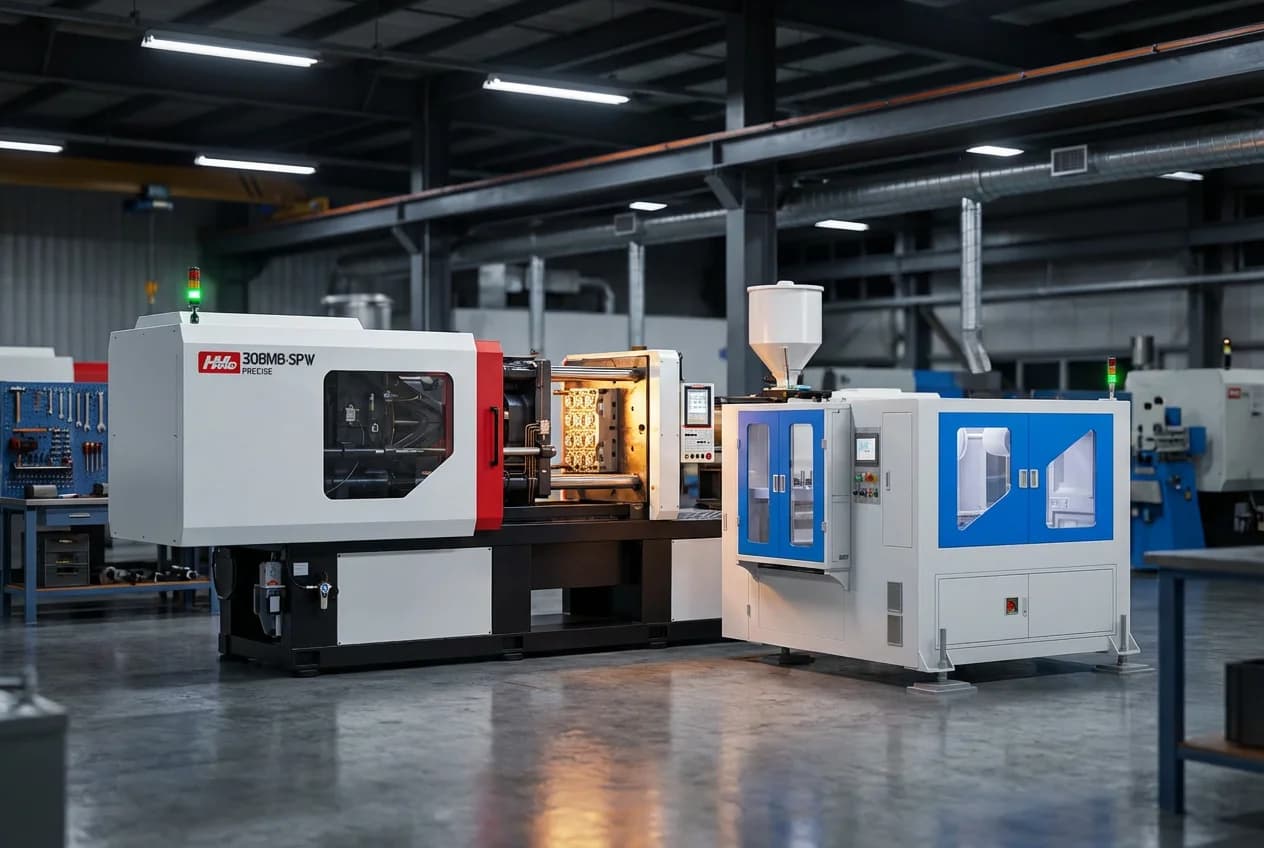
For Oman's yogurt cup market, HWAMDA recommends the HMD 270M8-SPV (2,700 kN) for 4-cavity startup operations and the HMD 400M8-SPV (4,000 kN) for 8-cavity IML production. Both models are configured for 415V/50Hz (Omani industrial standard, consistent with UK-derived electrical specifications). Oman's desert climate with summer temperatures of 40-48 degrees Celsius in coastal areas and up to 50 degrees Celsius inland requires maximum tropical cooling packages: high-capacity oil coolers, upgraded water chillers (XC-LF15A minimum at 51.7 kW), and air-conditioned electrical cabinets. The INOVA controller supports English and Arabic-compatible interface. Molds use 2344 (H13) steel with YUDO valve gate hot runners, designed for GCC-standard cup formats. Energy efficiency matters in Oman despite subsidized industrial electricity at approximately $0.03-0.06/kWh, as the government gradually moves toward cost-reflective pricing under Vision 2040.
Logistics and After-Sales Support for Oman
HWAMDA ships from Ningbo to Sohar port or Salalah port. Sohar (northern Oman, near Muscat) transit time is 18-22 days at $2,500-4,000 per 40ft container. Salalah (southern Oman) is a major transshipment hub with 15-18 day transit from Ningbo. From Sohar, inland transport to Muscat industrial areas takes 2-3 hours; from Salalah, trucking to Muscat takes 10-12 hours. Sohar is recommended for Muscat-area installations. Installation and commissioning requires 5-7 days on-site by HWAMDA engineers, with English/Arabic training over 3-5 days. HWAMDA's Dubai office (90 minutes from Muscat by air) provides the closest support hub, with spare parts deliverable to Oman in 1-2 days via air from Dubai warehouse or 2-3 days by road via Hatta border crossing. Remote diagnostics via WhatsApp are available during Gulf business hours.
Key Specs
- •From Sohar, inland transport to Muscat industrial areas takes 2-3 hours; from Salalah, trucking to Muscat takes 10-12 hours.
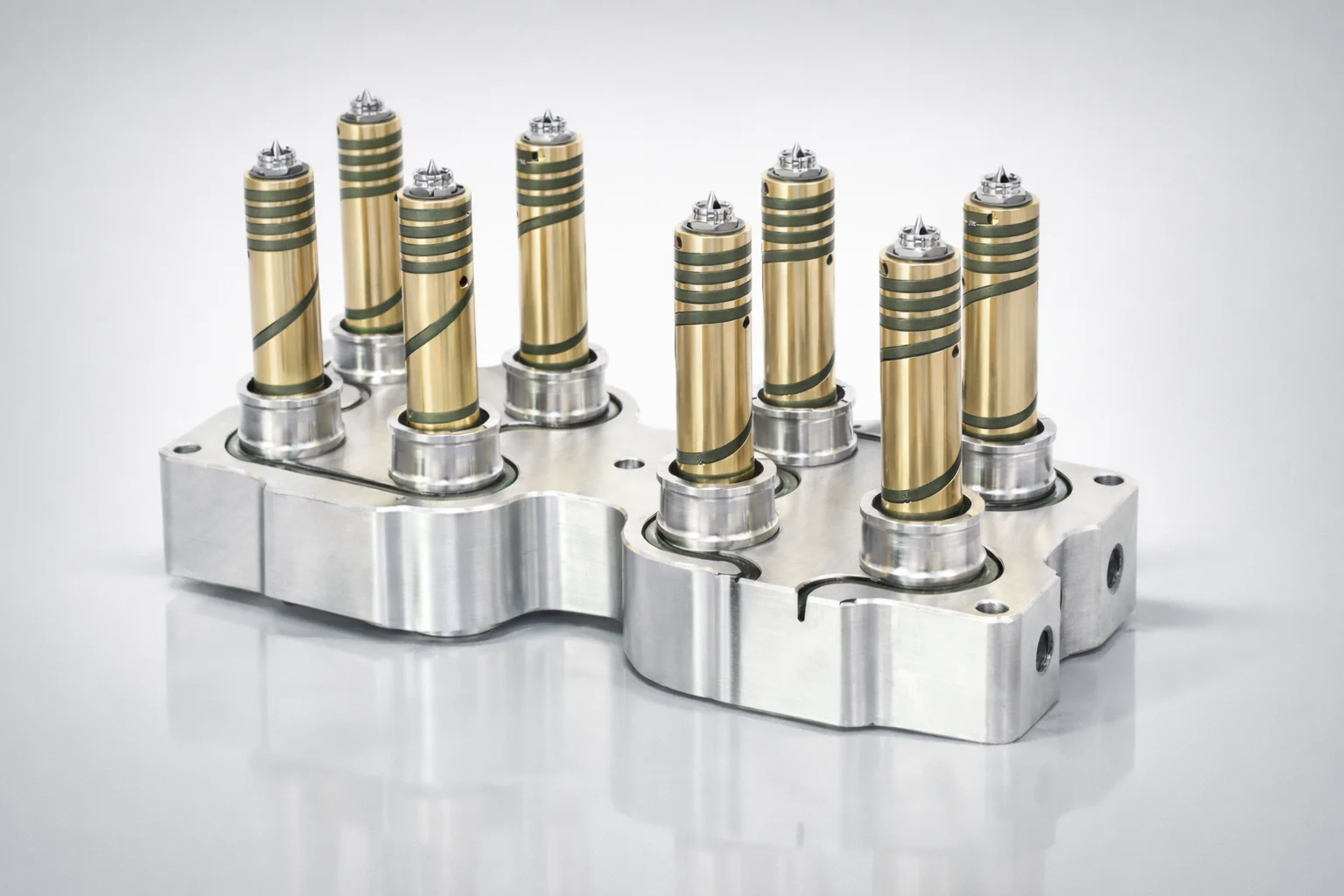
Hot runner system for balanced melt flow distribution
Getting Started: Investment and ROI for Oman
A complete 4-cavity yogurt cup IML line for Oman: HMD 270M8-SPV ($55,000-70,000), 4-cavity IML mold ($12,000-18,000), SWITEK IML robot ($15,000-20,000), chiller with full tropical package ($7,000-11,000), and shipping ($3,000-5,000). Total: $92,000-124,000. Madayn industrial estate benefits may include duty exemption (saving 5%), subsidized utilities, and 5-year tax holidays. Operating at 4 cavities, 4.0-second cycles, and 85% OEE, annual output reaches 20 million cups. Material cost at 5.5 g per cup and $1,250/MT PP is $0.0069 per cup. With Oman's subsidized electricity ($0.03-0.06/kWh) and labor (including expatriate operators at OMR 200-400/month, $520-1,040), total production cost is approximately $0.011-0.016 per cup. GCC retail cup prices range from OMR 0.010-0.020 ($0.026-0.052), yielding margins of 50-65%. GCC-wide market access multiplies addressable demand. Payback is estimated at 14-20 months.
Frequently Asked Questions
Yes. Oman's GCC membership provides duty-free, tariff-free access to Saudi Arabia, UAE, Bahrain, Kuwait, and Qatar for goods meeting GCC origin requirements. GSO food safety certification obtained in Oman is recognized across all GCC states. This expands the addressable market from 5.1 million Omani consumers to 58 million GCC consumers, dramatically improving production line utilization and investment economics.
Related Guides
Ready to Start Your Project?
Get a free consultation and quotation for your thin-wall packaging production line.
Join 500+ manufacturers in 60+ countries who trust HWAMDA.
Get Free Quote