

Material Cost Formula
Material cost per container = Container weight (kg) × Resin price ($/kg) × (1 + Scrap rate). For a 150ml yogurt cup weighing 7g using PP at $1,200/ton: Material cost = 0.007 kg × $1.20/kg × 1.03 (3% scrap) = $0.00866 per cup. For a 500ml food container weighing 15g: Material cost = 0.015 kg × $1.20/kg × 1.03 = $0.01854 per container. Scrap rate in well-run thin-wall production is 2-5%, consisting of runner waste (reground and reused, but with quality degradation), startup and shutdown waste, and rejected parts. Maximum regrind percentage should be 10-15% of total shot weight for food-grade packaging. Track actual scrap rates weekly and include them in your cost model. Material cost typically represents 45-55% of total production cost, making it the largest single component. Monitor PP resin prices monthly and adjust selling prices quarterly to protect margins. Track actual scrap rates weekly and include them in your cost model, updating assumptions quarterly to reflect operational improvements or material changes that affect waste levels.
Key Specs
- •For a 150ml yogurt cup weighing 7g using PP at $1,200/ton: Material cost = 0.007 kg × $1.20/kg × 1.03 (3% scrap) = $0.00866 per cup.
- •Scrap rate in well-run thin-wall production is 2-5%, consisting of runner waste (reground and reused, but with quality degradation), startup and shutdown waste, and rejected parts.
- •Maximum regrind percentage should be 10-15% of total shot weight for food-grade packaging.
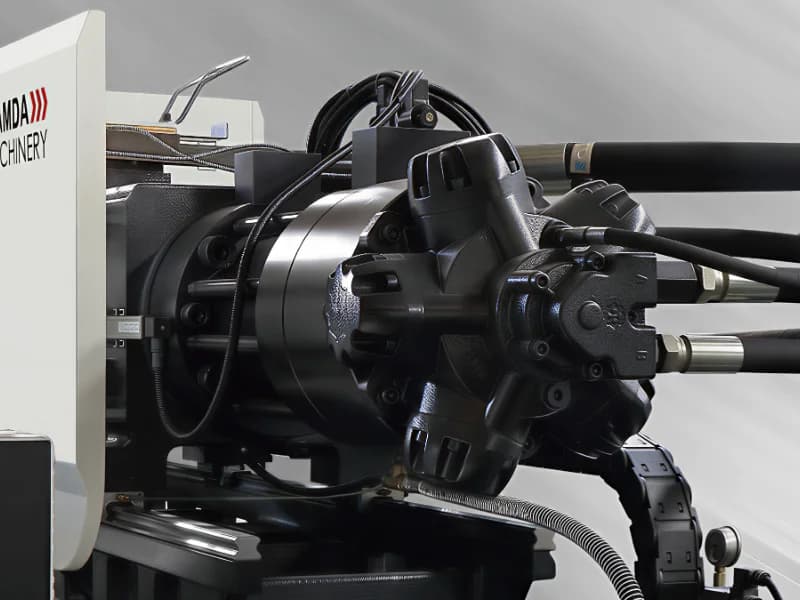
High-speed injection unit with linear guides
Machine Cost per Cycle
Machine cost per cycle = (Machine depreciation per hour + Energy cost per hour) / Cycles per hour. For an HWAMDA SPV5 400T at $100,000 purchase price, depreciated over 10 years (35,000 operating hours): Depreciation = $100,000 / 35,000 hours = $2.86/hour. Energy consumption of 18 kWh/hour at $0.10/kWh = $1.80/hour. Total machine cost = $4.66/hour. At 4-second cycle time: 900 cycles/hour. Machine cost per cycle = $4.66 / 900 = $0.00518. Machine cost per cup (8-cavity mold) = $0.00518 / 8 = $0.000648. Machine cost per cup (16-cavity mold at 4.5s = 800 cycles/hour) = $4.66 / 800 / 16 = $0.000364. This demonstrates the cost advantage of higher cavity counts—16-cavity reduces machine cost per cup by 44% compared to 8-cavity. Include auxiliary equipment depreciation (chiller, dryer, conveyor) at approximately 15-20% of machine cost. Include auxiliary equipment depreciation at approximately 15-20% of machine cost to capture the full machine-related cost in your production cost model for accurate pricing decisions.
Mold Depreciation Calculation
Mold depreciation per unit = Mold cost / (Expected mold life in cycles × Cavities per cycle). For an 8-cavity yogurt cup mold at $50,000 with 5 million cycle life: Depreciation per cup = $50,000 / (5,000,000 × 8) = $0.00125. For a 16-cavity mold at $90,000 with 5 million cycle life: Depreciation per cup = $90,000 / (5,000,000 × 16) = $0.001125. Include mold maintenance costs in the depreciation model. Annual maintenance (spare parts, polishing, cleaning, hot runner service) runs approximately 3-5% of mold purchase price per year. For a $50,000 mold: $1,500-2,500/year in maintenance. Add major refurbishment cost at mid-life (2.5 million cycles): approximately 10-15% of original mold cost for cavity re-polishing, seal replacement, and hot runner overhaul. Total mold lifecycle cost is typically 120-130% of initial purchase price. HWAMDA provides recommended maintenance schedules with each mold to maximize service life. HWAMDA provides recommended maintenance schedules with each mold to maximize service life and help customers accurately plan their mold lifecycle cost in production budgets.
Key Specs
- •Annual maintenance (spare parts, polishing, cleaning, hot runner service) runs approximately 3-5% of mold purchase price per year.
- •Add major refurbishment cost at mid-life (2.5 million cycles): approximately 10-15% of original mold cost for cavity re-polishing, seal replacement, and hot runner overhaul.
- •Total mold lifecycle cost is typically 120-130% of initial purchase price.
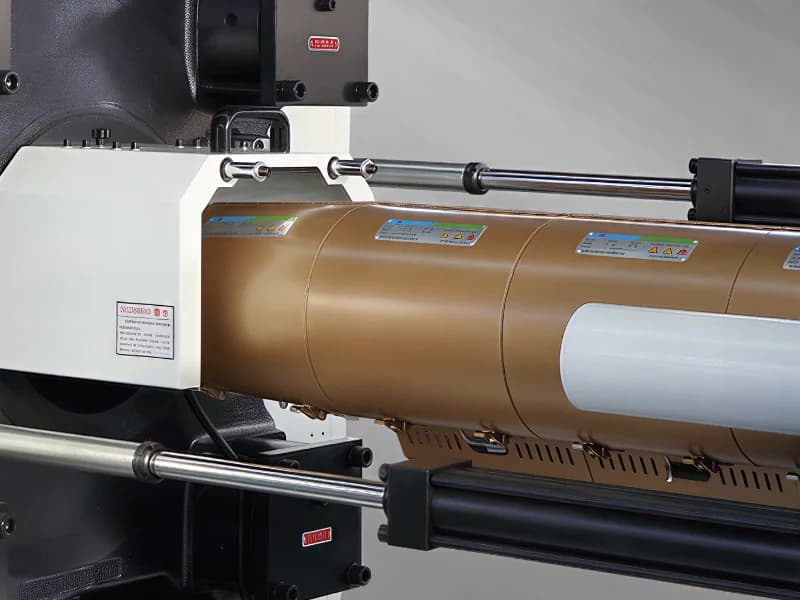
Servo-hydraulic drive system with energy recovery
Need Expert Advice?
Talk to our engineers about your specific production requirements. Free consultation.
Labor Cost per Unit
Labor cost per unit = (Operator wages per hour × Number of operators) / (Cups produced per hour). For a 2-operator setup earning $4/hour each, producing 7,200 cups/hour (8-cavity, 4s cycle): Labor cost = ($4 × 2) / 7,200 = $0.00111 per cup. This represents the direct labor cost for machine operation only. Include indirect labor costs: quality inspector ($3-5/hour), warehouse/packing staff ($3-4/hour), maintenance technician (prorated across machines), and management/administration overhead. Total labor cost including indirect staff typically doubles the direct operator cost. Labor cost per unit decreases with higher cavity counts and faster cycle times—the same operators produce more units per hour. Automation (robotic part removal, automated stacking, conveyor systems) reduces labor requirements and improves consistency, with typical ROI of 12-18 months in labor savings alone. Include indirect labor costs to capture the true labor component—quality inspectors, warehouse staff, maintenance technicians, and management overhead all contribute to per-unit cost.
Energy Cost Calculation
Energy cost per unit = Machine power consumption (kWh/hour) × Electricity rate ($/kWh) / Units produced per hour. For an HWAMDA SPV5 400T consuming 18 kWh/hour at $0.10/kWh producing 7,200 cups/hour (8-cavity, 4s): Energy cost = (18 × $0.10) / 7,200 = $0.00025 per cup. Include auxiliary equipment: chiller (5-8 kW), dryer (2-3 kW), conveyor (0.5-1 kW), compressed air (3-5 kW). Total system power approximately 28-34 kW. Total energy cost per cup including auxiliaries: approximately $0.00040-0.00050. Energy is typically 2-5% of total production cost—significant in aggregate but relatively small per unit. HWAMDA SPV5 servo-driven pumps save 40-60% energy compared to fixed-pump machines, reducing energy cost from $0.00080 to $0.00040 per cup. In regions with high electricity rates ($0.15-0.25/kWh), the SPV5's energy efficiency advantage becomes more pronounced, saving $2,000-5,000 per year per machine. HWAMDA SPV5 servo-driven pumps save 40-60% energy compared to fixed-pump machines, translating to measurable per-unit cost advantages that compound across millions of production cycles annually.
Key Specs
- •For an HWAMDA SPV5 400T consuming 18 kWh/hour at $0.10/kWh producing 7,200 cups/hour (8-cavity, 4s): Energy cost = (18 × $0.10) / 7,200 = $0.00025 per cup.
- •Energy is typically 2-5% of total production cost—significant in aggregate but relatively small per unit.
- •HWAMDA SPV5 servo-driven pumps save 40-60% energy compared to fixed-pump machines, reducing energy cost from $0.00080 to $0.00040 per cup.
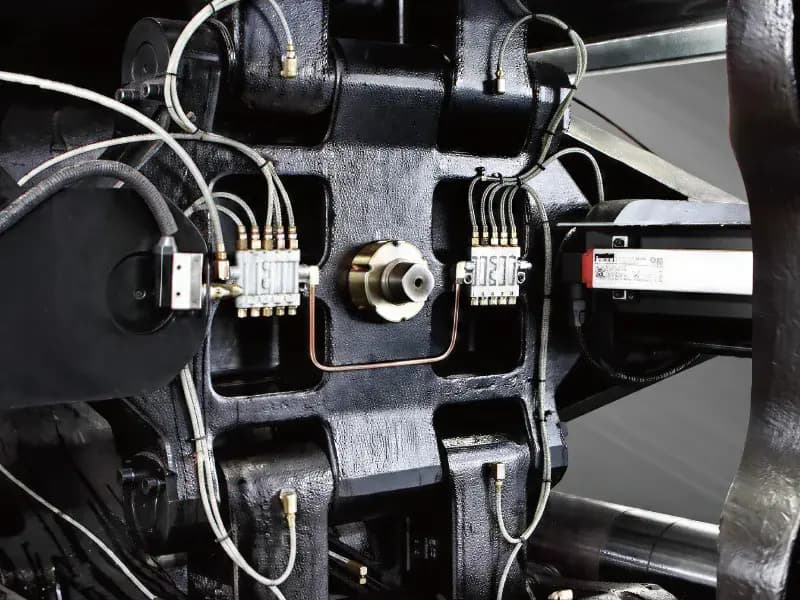
Toggle clamping unit — high rigidity for thin-wall molding
Total Cost and Pricing Strategy
Total cost per yogurt cup (8-cavity, 4s cycle on SPV5 400T): Material $0.0087, Machine depreciation $0.0006, Mold depreciation $0.0013, Labor (direct + indirect) $0.0022, Energy $0.0005, Packaging and overhead $0.0030. Total production cost: approximately $0.0163 per cup. Selling price at 30% gross margin: $0.023 per cup. Selling price at 40% gross margin: $0.027 per cup. Pricing strategy should account for: market competitive pricing (research local prices before setting targets), volume discounts for large customers (5-10% discount for 1M+ monthly commitment), IML premium (15-30% price premium for decorated containers vs plain), seasonal demand variations (build inventory during low season, capture premium during high season), and material price escalation clauses in long-term contracts. Review and update your cost model quarterly. HWAMDA provides production cost analysis tools as part of the project planning service for new customers. Review and update your cost model quarterly to reflect changes in material prices, energy rates, and labor costs, ensuring selling prices maintain target margins throughout market fluctuations.
Frequently Asked Questions
Total production cost per 150ml PP yogurt cup ranges $0.016-0.025 depending on cavity count, cycle time, labor rates, and energy costs. The major components are: material 50-55% ($0.008-0.014), labor 12-18% ($0.002-0.004), overhead and packaging 15-20% ($0.002-0.004), machine and mold depreciation 8-12% ($0.001-0.003), and energy 2-5% ($0.0004-0.001). Higher cavity counts (16 vs 8) and faster cycle times reduce fixed cost allocation, achieving the lower end of the range. Higher cavity counts and faster cycle times reduce fixed cost allocation per cup, achieving the lower end of this cost range.
Related Guides
Ready to Start Your Project?
Get a free consultation and quotation for your thin-wall packaging production line.
Join 500+ manufacturers in 60+ countries who trust HWAMDA.
Get Free Quote