

Incoming Material Quality Control for PP Resin
Raw material quality directly determines part quality in thin-wall molding. Establish incoming inspection for every PP resin delivery with the following checks. Verify Melt Flow Index using an MFI tester per ISO 1133 at 230 degrees Celsius and 2.16 kg load, accepting only lots within plus or minus 5% of the target MFI of 35-80 g/10min specified for your application. Measure moisture content using a moisture analyzer, rejecting lots above 0.05% moisture. Check pellet uniformity by visual inspection for discoloration, contamination, or size variation exceeding 10%. Request and file the Certificate of Analysis from the resin supplier for each lot, confirming FDA 21 CFR or EU 10/2011 compliance. Store approved resin in sealed containers in a climate-controlled area at 20-30 degrees Celsius and below 60% relative humidity. Before processing on HWAMDA SPV5 machines, dry PP at 80-90 degrees Celsius for 2-4 hours in a dehumidifying hopper dryer, even though PP is not hygroscopic, to ensure consistent feeding and eliminate surface moisture that causes splay marks on 0.35-0.50 mm wall parts.
Key Specs
- •Verify Melt Flow Index using an MFI tester per ISO 1133 at 230 degrees Celsius and 2.16 kg load, accepting only lots within plus or minus 5% of the target MFI of 35-80 g/10min specified for your application.
- •Measure moisture content using a moisture analyzer, rejecting lots above 0.05% moisture.
- •Check pellet uniformity by visual inspection for discoloration, contamination, or size variation exceeding 10%.
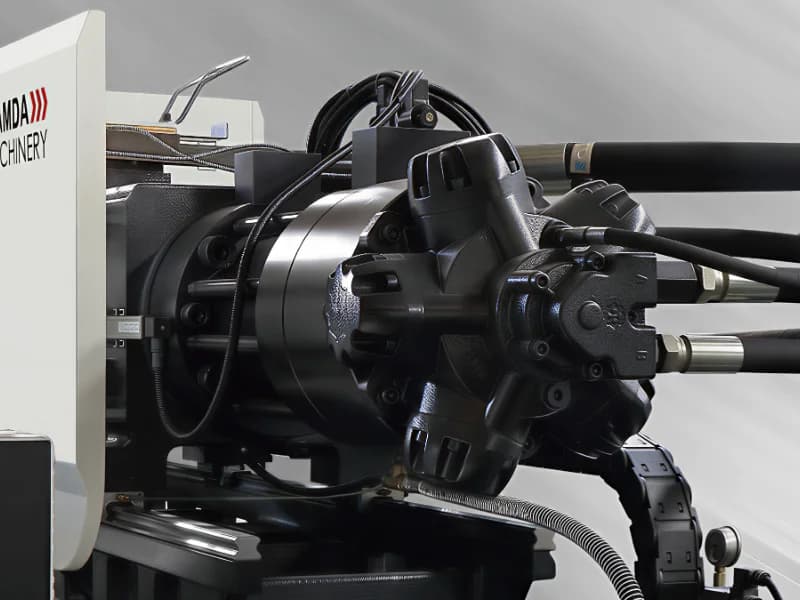
High-speed injection unit with linear guides
In-Process Monitoring Using INOVA Controller Data
The INOVA controller on HWAMDA SPV5 machines monitors and records over 40 process parameters each cycle, providing the data foundation for Statistical Process Control. Establish control limits for these critical parameters: injection peak pressure within plus or minus 3% of setpoint at 158-182 MPa, cushion position within plus or minus 0.5 mm, cycle time within plus or minus 0.2 seconds of target, barrel zone temperatures within plus or minus 2 degrees Celsius across all 6 zones, and screw recovery time within plus or minus 0.3 seconds. Configure the INOVA alarm system to flag any parameter exceeding control limits, automatically diverting suspect parts to a reject bin via the SWITEK robot sorting function. Implement SPC charting using X-bar and R charts for injection pressure, cushion, and cycle time, sampling 5 consecutive shots every 30 minutes. Target Cpk above 1.33 for all critical parameters. The controller exports data in CSV format for analysis in external SPC software. For multi-cavity molds running 4-16 cavities, monitor cavity balance by comparing part weights across all cavities, accepting imbalance of no more than plus or minus 2% between heaviest and lightest cavity.
Part Weight Monitoring and Control
Part weight is the most sensitive single indicator of process stability in thin-wall molding. Set up a precision balance with 0.01g resolution adjacent to the HWAMDA SPV5 machine for regular weight checks. For yogurt cups weighing 5-7g, the acceptable weight range is typically plus or minus 0.15g or plus or minus 2.5%. For food containers weighing 15-25g, tolerance is plus or minus 0.3g. For sauce cups weighing 2-4g, tolerance tightens to plus or minus 0.1g due to the lower absolute weight. Implement 100% weight monitoring using an inline checkweigher downstream of the SWITEK takeout robot, configured to eject parts outside the weight window. Weight trending upward indicates screw check ring wear allowing material backflow, which the INOVA controller can correlate with increasing cushion position. Weight trending downward suggests barrel temperature drop or material viscosity change. Record weight data in control charts with UCL and LCL at plus or minus 3 sigma from the process mean, triggering investigation when any single point exceeds the limits or when 7 consecutive points trend in one direction.
Key Specs
- •For yogurt cups weighing 5-7g, the acceptable weight range is typically plus or minus 0.15g or plus or minus 2.5%.
- •Implement 100% weight monitoring using an inline checkweigher downstream of the SWITEK takeout robot, configured to eject parts outside the weight window.
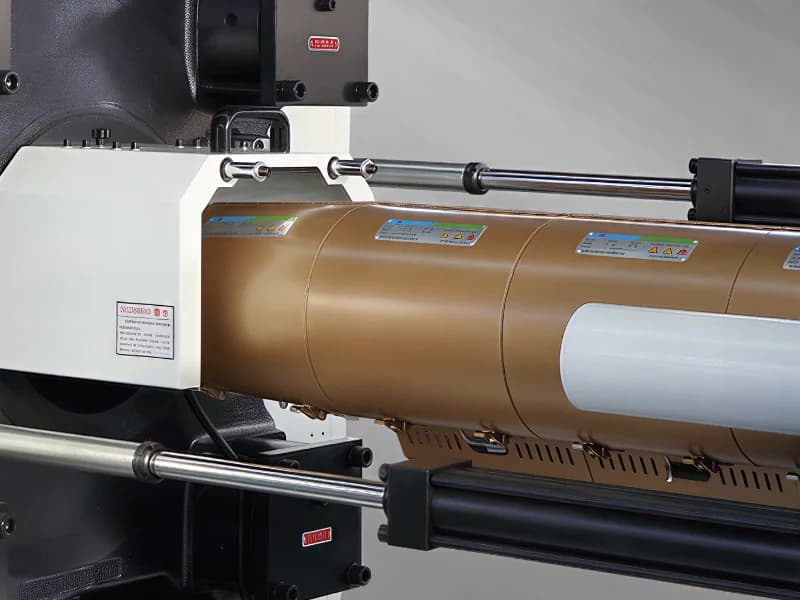
Servo-hydraulic drive system with energy recovery
Need Expert Advice?
Talk to our engineers about your specific production requirements. Free consultation.
Dimensional Inspection Protocol
Thin-wall parts require dimensional verification at specific frequencies based on feature criticality. Using calibrated digital calipers with 0.01 mm resolution and a CMM for critical dimensions, inspect the following. Wall thickness at 4 equidistant points around the circumference, accepting variation of plus or minus 0.05 mm from nominal. Rim diameter and ovality for cups, with ovality limit of 0.3 mm on a 75-95 mm diameter yogurt cup. Part height within plus or minus 0.2 mm, measured from rim to base. Base flatness within 0.15 mm deviation across the full base diameter. For IML containers, label position accuracy within plus or minus 0.5 mm from nominal. Inspection frequency: measure 1 part per cavity every 2 hours during stable production, increasing to every 30 minutes during startup or after any process adjustment. After mold changes on the SPV5 machine, perform full dimensional inspection of 5 consecutive shots from each cavity before releasing production. Document results on inspection forms traceable to the INOVA controller production lot data, including mold cycle count and process parameter summary.
Visual Inspection and Defect Classification
Establish a visual inspection standard with reference samples showing acceptable and rejectable conditions. For thin-wall food packaging on HWAMDA SPV5 production lines, classify defects into three categories. Critical defects requiring 100% rejection: short shots showing incomplete fill of 0.35-0.70 mm wall sections, contamination or black specks larger than 0.3 mm, burn marks from trapped air at injection speeds of 368-560 mm/s, and cracks or stress whitening at gate areas. Major defects requiring lot rejection above 1.5% AQL: flow lines visible under normal lighting conditions, sink marks deeper than 0.05 mm, flash exceeding 0.1 mm at parting lines, and weld lines in structural areas. Minor defects acceptable below 4.0% AQL: slight color variation within delta E of 2.0, minor surface gloss variation, and superficial scratches under 10 mm length. Train inspection operators using certified reference panels and requalify every 6 months. For high-speed production exceeding 10,000 parts per hour, supplement manual inspection with a vision system camera mounted at the SWITEK robot handoff point, capable of detecting defects at production speed.
Key Specs
- •Critical defects requiring 100% rejection: short shots showing incomplete fill of 0.35-0.70 mm wall sections, contamination or black specks larger than 0.3 mm, burn marks from trapped air at injection speeds of 368-560 mm/s, and cracks or stress whitening at gate areas.
- •Major defects requiring lot rejection above 1.5% AQL: flow lines visible under normal lighting conditions, sink marks deeper than 0.05 mm, flash exceeding 0.1 mm at parting lines, and weld lines in structural areas.
- •Minor defects acceptable below 4.0% AQL: slight color variation within delta E of 2.0, minor surface gloss variation, and superficial scratches under 10 mm length.
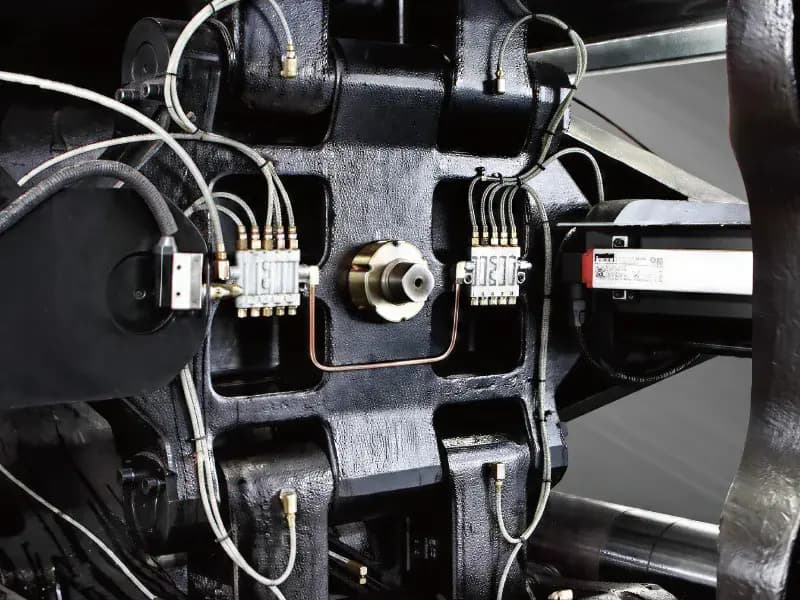
Toggle clamping unit — high rigidity for thin-wall molding
Documentation and Traceability System
A complete quality control system requires documentation linking raw materials, process parameters, and finished product inspection results. Implement lot traceability by assigning unique lot numbers combining the date, machine number, mold number, and material lot. The INOVA controller on each HWAMDA SPV5 machine stores 90 days of continuous production data including all injection parameters, alarm events, and cycle counts. Export this data daily to your quality management system. Create a product release checklist requiring sign-off on incoming material COA verification, process parameter conformance within SPC limits, part weight within specification for all cavities, dimensional inspection passing results, and visual inspection at or below AQL limits. Retain production samples from each lot consisting of 10 parts per cavity stored for the product shelf life plus 1 year. For food packaging applications requiring certification under ISO 22000 or BRC, integrate your QC documentation into the food safety management system, with quality records forming part of the HACCP verification activities. Conduct monthly management review of quality KPIs including PPM defect rate target below 500 PPM, customer complaint tracking, and process capability trends.
Frequently Asked Questions
Essential QC equipment for thin-wall injection molding includes a precision balance with 0.01g resolution (800-1,500 USD), digital calipers with 0.01 mm resolution (200-400 USD), a wall thickness gauge or ultrasonic thickness meter (1,500-3,000 USD), a moisture analyzer for incoming resin (2,000-4,000 USD), and an MFI tester (5,000-8,000 USD). Total minimum investment is 10,000-17,000 USD. The HWAMDA SPV5 INOVA controller provides process monitoring data at no additional cost.
Related Guides
Ready to Start Your Project?
Get a free consultation and quotation for your thin-wall packaging production line.
Join 500+ manufacturers in 60+ countries who trust HWAMDA.
Get Free Quote