

Process Principle Comparison
Thin-wall injection molding forces molten plastic at high speed (300-500 mm/s) into a closed, precision-machined mold under pressures of 150-250 MPa. The mold defines both the inside and outside surfaces of the container with tight dimensional control. This process starts from plastic pellets and produces a finished container in a single operation lasting 3-8 seconds. Thermoforming heats a flat plastic sheet to its softening temperature, then uses vacuum, pressure, or a combination to draw the soft sheet into a mold cavity. Only one surface of the container contacts the mold—the other surface is formed by stretching. The process starts from extruded plastic sheet (requiring a separate extrusion step) and forms containers in 2-4 seconds per cycle with multi-up tooling. The fundamental difference is that injection molding controls both surfaces precisely, while thermoforming precisely controls only the mold-contact surface. Understanding their fundamental differences helps food packaging entrepreneurs choose the right technology for their target products, production volumes, and available investment capital.
Key Specs
- •Thin-wall injection molding forces molten plastic at high speed (300-500 mm/s) into a closed, precision-machined mold under pressures of 150-250 MPa.
- •This process starts from plastic pellets and produces a finished container in a single operation lasting 3-8 seconds.
- •The process starts from extruded plastic sheet (requiring a separate extrusion step) and forms containers in 2-4 seconds per cycle with multi-up tooling.
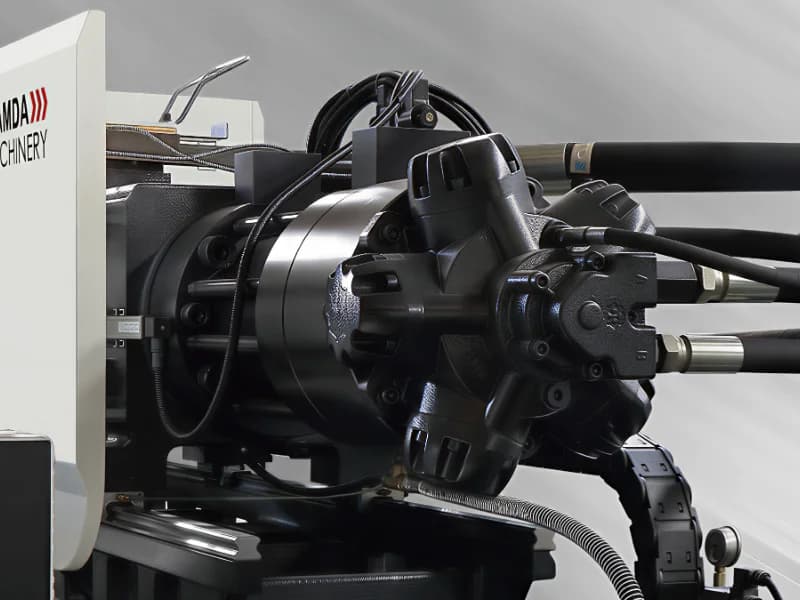
High-speed injection unit with linear guides
Product Quality and Precision
Injection molded containers achieve uniform wall thickness within ±0.05mm across the entire part, controlled by the precise gap between core and cavity. This uniformity ensures consistent stacking, reliable lid fit, and uniform strength. Surface quality on both inside and outside matches the mold finish—SPI A-2 mirror finish is standard for yogurt cups. Features like snap-fit rims, embossed logos, and thin ribs are reproduced with sharp detail. Thermoformed containers have inherently non-uniform wall thickness—the material thins significantly in deep-draw areas and corners, with typical thickness variation of ±30-50%. This limits thermoforming to shallow shapes (draw ratios below 1.5:1) and makes it unsuitable for containers requiring precise wall thickness for stacking strength or lid fit. Surface quality is good on the mold-contact side but shows the sheet texture on the non-contact side. Fine details and sharp features are not achievable with thermoforming. The wall thickness non-uniformity in thermoforming also limits material optimization, as the starting sheet must accommodate worst-case thinning in deep-draw areas, increasing material waste.
Material Efficiency and Cost
Injection molding uses material with near-zero waste—only the runner system creates scrap (3-5% of shot weight), which is reground and recycled in-line. Material cost per container is minimized because wall thickness is precisely controlled to the minimum needed for structural requirements. A 150ml yogurt cup uses only 6-8g of PP material. Thermoforming generates significant trim waste—the sheet between container cavities and around the edges is cut away, typically representing 25-40% of the total sheet weight. While this trim is recyclable, the reprocessing adds cost and energy. The starting sheet must also be thicker than the desired minimum wall thickness to account for stretching, increasing material usage per container. However, thermoforming sheet material is less expensive per kilogram than injection-grade pellets because it does not require the high MFI formulation needed for thin-wall injection. Overall material cost per container is comparable for simple shapes but favors injection molding for deeper, more complex containers.
Key Specs
- •Injection molding uses material with near-zero waste—only the runner system creates scrap (3-5% of shot weight), which is reground and recycled in-line.
- •Thermoforming generates significant trim waste—the sheet between container cavities and around the edges is cut away, typically representing 25-40% of the total sheet weight.
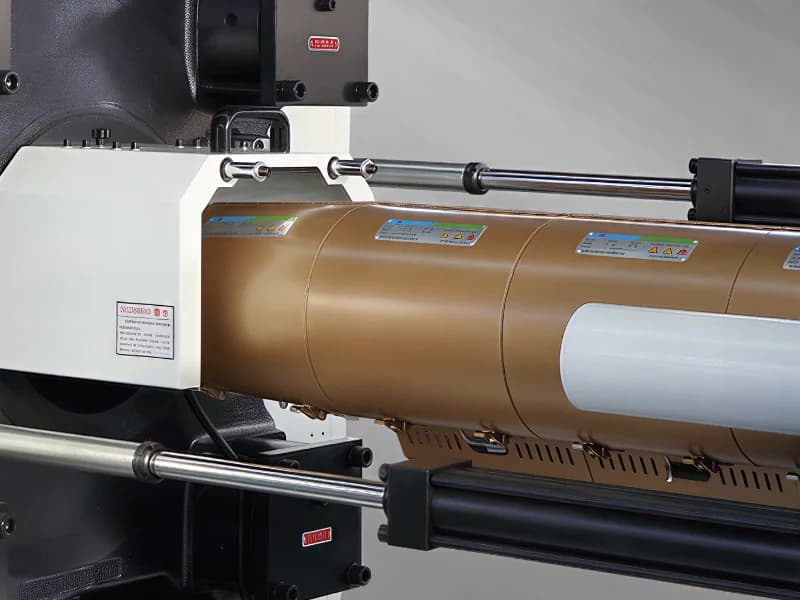
Servo-hydraulic drive system with energy recovery
Need Expert Advice?
Talk to our engineers about your specific production requirements. Free consultation.
Production Speed Comparison
HWAMDA SPV5 injection molding machines produce thin-wall containers at 3-8 seconds per cycle with 4-48 cavities per cycle, depending on product size. An 8-cavity yogurt cup mold at 4 seconds produces 7,200 cups per hour. A 32-cavity tableware mold at 5 seconds produces 23,040 pieces per hour. Output scales by adding cavities (limited by machine tonnage) or additional machines. Thermoforming lines run at 15-30 cycles per minute with multi-up tooling producing 4-32 containers per cycle. A high-speed thermoforming line producing yogurt cups at 25 cycles per minute with 20 cavities delivers 30,000 cups per hour—significantly higher than a single injection molding machine. However, thermoforming requires an upstream extrusion line running continuously to produce the sheet, adding equipment cost and complexity. For maximum volume of simple shapes, thermoforming achieves higher throughput; for precision products, injection molding is preferred. For maximum volume of simple shallow shapes, thermoforming achieves higher throughput per machine, but injection molding is strongly preferred for precision products requiring consistent wall thickness and premium surface finish.
Equipment Investment
A complete thin-wall injection molding line (HWAMDA SPV5 machine + mold + auxiliaries) costs $170,000-300,000 depending on machine tonnage and mold complexity. The tooling investment is moderate and can be amortized over 3-5 million cycle mold life. Adding IML decoration is integrated into the molding process with an additional $40,000-80,000 for robotic automation. A complete thermoforming line including sheet extruder, thermoforming machine, trimming station, and stacking system costs $300,000-800,000 depending on capacity and automation level. However, thermoforming tooling is significantly cheaper—$5,000-20,000 per tool versus $30,000-100,000 for injection molds. This makes thermoforming attractive for businesses with many product designs that change frequently. The break-even point where injection molding's higher tooling cost is offset by its lower per-unit production cost is typically 2-5 million units per mold design. The break-even point where injection molding's higher tooling cost is offset by its lower per-unit production cost is typically 2-5 million units per mold design, depending on product complexity.
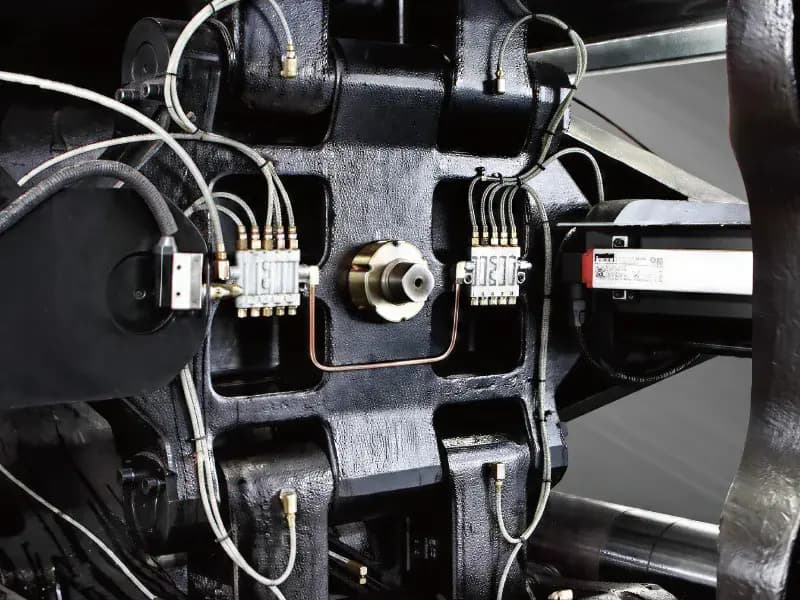
Toggle clamping unit — high rigidity for thin-wall molding
When Each Process is Best
Choose thin-wall injection molding for: yogurt cups and dairy containers requiring precise rim dimensions for lid sealing, IML-decorated branded containers, deep-draw containers (draw ratio above 1:1), stackable containers requiring consistent wall thickness, sauce cups and small containers where precision is critical, and any product requiring both surfaces to have controlled finish. HWAMDA SPV5 machines with matched molds deliver optimal results for these applications. Choose thermoforming for: shallow trays and clamshell containers (draw ratio below 1:1), products requiring frequent design changes where low tooling cost is advantageous, transparent PET deli containers and fruit packaging, high-volume commodity products where maximum output speed is the priority, and multi-compartment trays that are impractical to injection mold. Many large packaging manufacturers operate both technologies, using injection molding for precision products and thermoforming for shallow containers. Many large packaging manufacturers operate both technologies, using injection molding for precision yogurt cups and branded containers while using thermoforming for shallow trays and clamshell packaging.
Frequently Asked Questions
Injection molding is cheaper for yogurt cups at production volumes above 2-3 million units per design. While thermoforming tooling costs less ($5,000-15,000 vs $40,000-60,000 for injection molds), the per-unit cost of injection molding is lower due to better material efficiency, precise wall thickness control (using minimum material), and integrated decoration capability. Injection molded yogurt cups also offer superior quality with uniform walls, precise rim dimensions for lid sealing, and IML decoration compatibility. Injection molded cups also command higher selling prices due to superior quality, adding revenue benefit to the cost comparison.
Related Guides
Ready to Start Your Project?
Get a free consultation and quotation for your thin-wall packaging production line.
Join 500+ manufacturers in 60+ countries who trust HWAMDA.
Get Free Quote