

Bangladesh Disposable Tableware Market Opportunity
Bangladesh's food packaging market is valued at approximately USD 1.8 billion in 2025, growing at 9-10% annually driven by urbanization, rising middle-class incomes (GDP per capita reaching USD 2,800), and expansion of organized food retail and quick-service restaurants. The country's plastics industry encompasses approximately 3,000-4,000 companies, with injection molding concentrated among 150-200 firms primarily in Dhaka, Chittagong, and Gazipur industrial zones. Major players include RFL Plastics (Bangladesh's largest), Bengal Plastic, Partex Plastics, and National Polymer. Import dependency for injection molding machinery exceeds 95%, with Chinese brands holding dominant market share due to competitive pricing and established dealer networks. The HS 8477 import duty is 5-10% with additional supplementary duty considerations, and 15% VAT applies. BSTI (Bangladesh Standards and Testing Institution) certification is required for industrial equipment. Key opportunity: Bangladesh's per-capita plastic consumption of approximately 5kg/year remains well below the Asian average of 20kg/year, indicating massive growth runway.
Key Specs
- •Bangladesh's food packaging market is valued at approximately USD 1.8 billion in 2025, growing at 9-10% annually driven by urbanization, rising middle-class incomes (GDP per capita reaching USD 2,800), and expansion of organized food retail and quick-service restaurants.
- •Import dependency for injection molding machinery exceeds 95%, with Chinese brands holding dominant market share due to competitive pricing and established dealer networks.
- •The HS 8477 import duty is 5-10% with additional supplementary duty considerations, and 15% VAT applies.
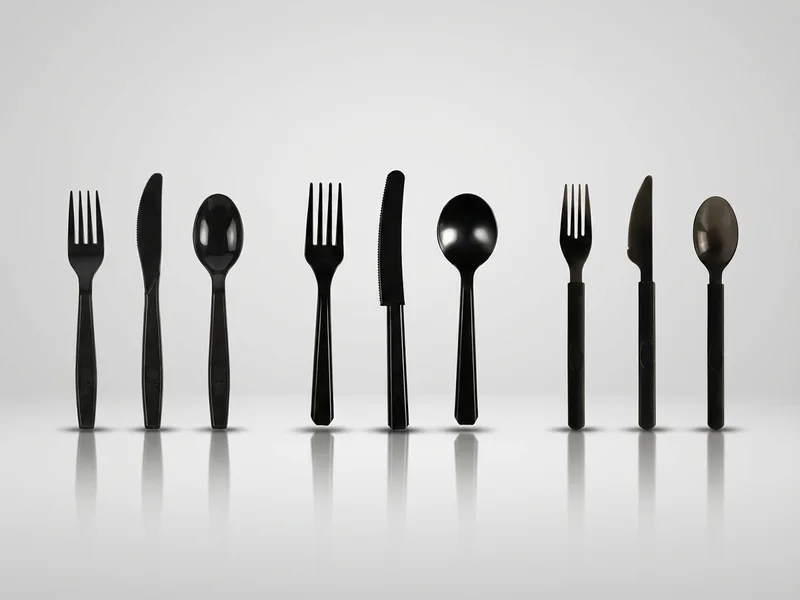
Disposable tableware production line — forks, spoons, knives
SPV5 Machine Specifications for Bangladesh Operations
The HMD 270M8-SPV provides 2700kN clamping force with 368mm/s injection speed, suitable for 16-32 cavity tableware molds producing items at 3-5g. For producers targeting larger bowls and plates, the HMD 320M8-SPV at 3200kN handles 8-16 cavity configurations. Both operate on Bangladesh's 400V/3-phase/50Hz power standard. The servo-hydraulic drive consuming 1.0-1.2 kWh/kg is critical in Bangladesh where industrial electricity averages BDT 9.00-9.80/kWh (USD 0.075-0.082/kWh) and frequent load shedding affects production continuity. The INOVA controller includes automatic restart sequencing after power interruption, minimizing material waste and startup time when grid power resumes. Machine dimensions of 5.2x1.5x2.1m suit the compact factory layouts typical in Gazipur and Tongi industrial areas. Injection pressure of 220 MPa ensures complete fill at 0.4mm wall thickness even with lower-grade PP available in the Bangladeshi market. Tie bar spacing of 580x580mm on the 270T accommodates molds up to 500x500mm, while the 320T offers 650x650mm tie bar distance for larger tooling.
Tooling and Production Line Configuration
For Bangladesh's price-sensitive market, HWAMDA recommends starting with 16-24 cavity molds to balance investment cost against output requirements. A 24-cavity fork/spoon mold with 3-drop YUDO hot runner system costs USD 20,000-35,000 from Chinese mold suppliers with 45-60 day delivery. Running at 3.5-4 second cycles on the SPV5-270, output reaches 21,600-24,700 pieces per hour. For plates (180-200mm diameter, 5-7g), 8-cavity molds at USD 18,000-28,000 deliver 4.5-5 second cycles producing 5,760-6,400 pieces hourly. Given Bangladesh's low labor costs (average factory worker salary BDT 12,000-18,000/month or USD 100-150/month), manual part removal and stacking is economically viable for initial operations, with automated take-out recommended when monthly output exceeds 10 million pieces. A basic production line includes the SPV5 machine, air-cooled chiller (preferred where water supply is unreliable), hopper loader, and simple conveyor belt with manual counting station. Total line investment for this semi-manual configuration: USD 120,000-165,000. Upgrade path to SWITEK robotic extraction adds USD 12,000-18,000 as volumes grow.
Key Specs
- •For Bangladesh's price-sensitive market, HWAMDA recommends starting with 16-24 cavity molds to balance investment cost against output requirements.
- •Running at 3.5-4 second cycles on the SPV5-270, output reaches 21,600-24,700 pieces per hour.
- •For plates (180-200mm diameter, 5-7g), 8-cavity molds at USD 18,000-28,000 deliver 4.5-5 second cycles producing 5,760-6,400 pieces hourly.
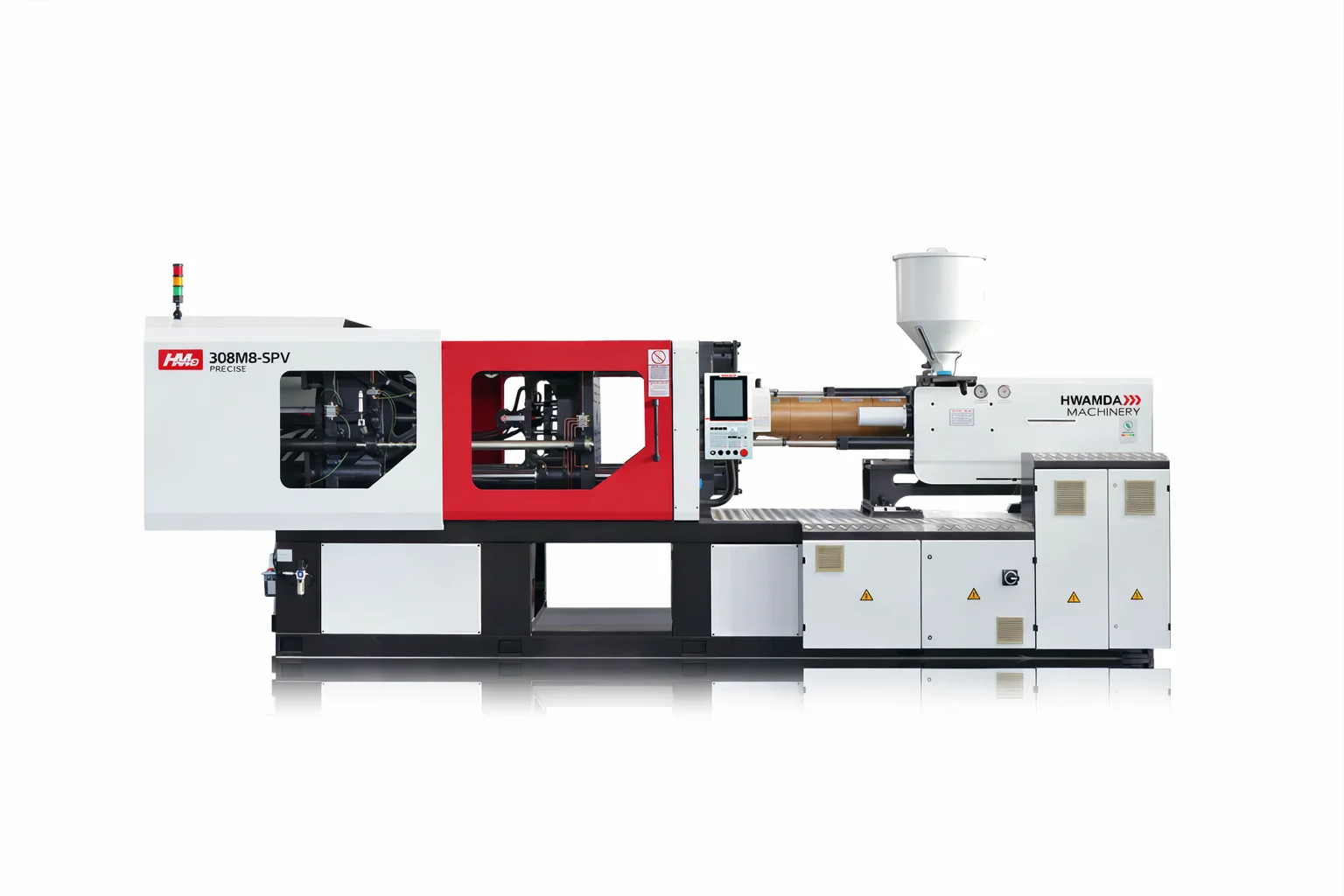
SPV5 series machine for high-cavity tableware molds
Need Expert Advice?
Talk to our engineers about your specific production requirements. Free consultation.
Material Sourcing and Processing for Bangladesh
Bangladesh imports virtually all PP resin, primarily from the Middle East (SABIC, Borouge), India (Reliance, HPCL), and Southeast Asia (IRPC Thailand, Lotte Chemical). Landed PP pricing in Chittagong port ranges USD 1,150-1,350/MT including duties and clearing charges. PP import duty is 5% with additional supplementary duty and 15% VAT (input VAT credits available for manufacturers). For thin-wall tableware, source PP homopolymer with MFI 35-50 g/10min meeting food-grade standards. Locally available grades include SABIC 520P, Borouge HJ325MO, and Reliance H200MA. Processing on the SPV5 uses barrel temperatures of 220-245C (slightly lower than European settings due to higher ambient temperatures averaging 28-35C in Bangladeshi factories), mold temperature of 25-35C, and injection speed of 280-368mm/s. High ambient humidity (70-90% during monsoon season June-September) necessitates a dehumidifying hopper dryer with -40C dewpoint to prevent moisture-related defects including splay marks and reduced mechanical properties. HWAMDA includes material drying specifications in every Bangladeshi installation package.
Production Economics in Bangladesh
Bangladesh offers among the lowest manufacturing costs in Asia, making tableware production highly competitive for both domestic and export markets. A complete SPV5-270 semi-manual line at USD 120,000-165,000 produces approximately 14.7 million cutlery pieces per month running 22 hours/day at 80% OEE with 24-cavity mold and 4-second cycles. Monthly PP cost at 3.5g per piece and USD 1,250/MT landed: approximately USD 64,300. Labor for 3-shift operation with 3 workers per shift (operator, helper, packer) at BDT 15,000-25,000/month: approximately USD 1,200-2,000 total monthly labor. Energy cost at 1.1 kWh/kg and USD 0.078/kWh: approximately USD 2,800 monthly. Total operating cost approximately USD 72,000-75,000 monthly. Domestic wholesale price for disposable cutlery ranges BDT 0.40-0.80 (USD 0.003-0.007) per piece, generating monthly revenue of USD 44,000-103,000. At competitive pricing of USD 0.005/piece, revenue reaches USD 73,500 versus costs of USD 72,000, yielding thin margins that require scaling to 2-3 lines for profitability. Export to Middle East and African markets at USD 0.008-0.012/piece significantly improves margins to 30-40%.
Key Specs
- •A complete SPV5-270 semi-manual line at USD 120,000-165,000 produces approximately 14.7 million cutlery pieces per month running 22 hours/day at 80% OEE with 24-cavity mold and 4-second cycles.
- •Export to Middle East and African markets at USD 0.008-0.012/piece significantly improves margins to 30-40%.
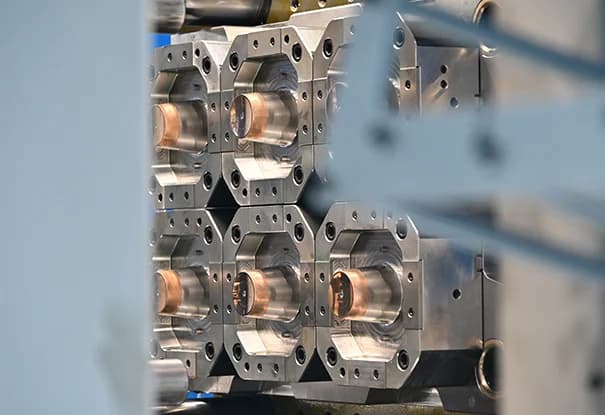
High-cavity mold detail — precision machined cavities
Import Procedures and Support Infrastructure for Bangladesh
HWAMDA ships to Chittagong port (Bangladesh's primary cargo port handling 90% of imports) with 12-18 day transit from Shanghai, among the shortest routes in South Asia. Customs clearance requires LC-based payment (standard for Bangladesh imports), commercial invoice, packing list, bill of lading, certificate of origin, and BSTI clearance for industrial machinery. Total import cost additions include 5% customs duty, applicable supplementary duty, 5% advance income tax (adjustable against annual tax liability), and 15% VAT. For bonded warehouse operations under EPZ/BEPZA regulations, duty exemptions apply for export-oriented production units. Installation in Bangladesh requires stable 400V/50Hz power with HWAMDA-recommended voltage stabilizer (100 kVA minimum) to compensate for grid fluctuations of +/-15% common in industrial zones. Backup diesel generator of 75-100 kVA is recommended for production continuity during load shedding. HWAMDA provides commissioning engineers for 10-14 days on-site and ongoing remote support via the INOVA controller's network interface. Spare parts delivery via air freight to Dhaka's Hazrat Shahjalal International Airport takes 5-7 days. IPF Bangladesh (Dhaka) is the primary plastics industry trade fair.
Frequently Asked Questions
A semi-manual SPV5-270 line with 24-cavity mold, air-cooled chiller, and basic conveyor costs USD 120,000-165,000 FOB. Add approximately 25-30% for shipping, duties (5% customs, 15% VAT), and installation. Total landed and installed cost: USD 155,000-215,000. For bonded/EPZ operations, duty exemptions reduce this significantly. Running 22 hours/day at 80% OEE produces approximately 14.7 million cutlery pieces monthly.
Related Guides
Ready to Start Your Project?
Get a free consultation and quotation for your thin-wall packaging production line.
Join 500+ manufacturers in 60+ countries who trust HWAMDA.
Get Free Quote