

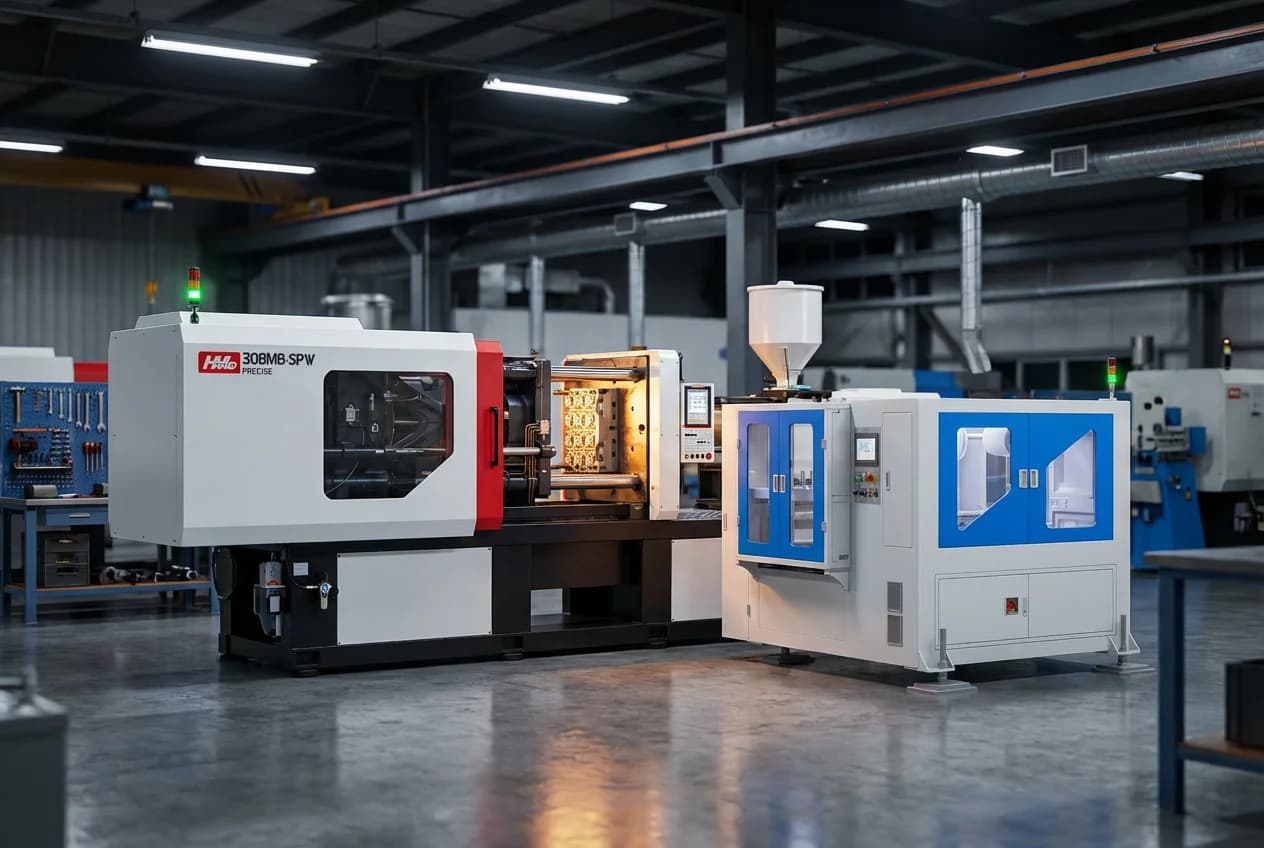
India Food Packaging Market Overview
India is the world's fifth-largest economy with 1.44 billion consumers, GDP per capita of approximately USD 2,600, and one of the fastest-growing food packaging markets globally, valued at approximately USD 8,500 million and growing at 8-10% annually. Rigid plastic packaging is the fastest-growing segment, driven by urbanization (now exceeding 35%), rising disposable incomes, and the formalization of India's massive food and beverage sector. Annual plastic packaging production exceeds 4,000,000 tonnes, supported by over 2,000 injection molding companies across Maharashtra, Gujarat, Tamil Nadu, Uttar Pradesh, and the National Capital Region. India is the world's largest tea consumer, with chai being the national beverage consumed across all demographics. An estimated 2+ million tea stalls operate nationwide, with branded chains like Chai Point (210+ outlets), Chaayos (200+ outlets), MBA Chai Wala, Yewale Amruttulya (90+ outlets), and Tea Trails expanding rapidly. Multinational players including Starbucks India, Costa Coffee, and Tim Hortons add structured demand for branded disposable cups.
Key Specs
- •India is the world's fifth-largest economy with 1.44 billion consumers, GDP per capita of approximately USD 2,600, and one of the fastest-growing food packaging markets globally, valued at approximately USD 8,500 million and growing at 8-10% annually.
- •Rigid plastic packaging is the fastest-growing segment, driven by urbanization (now exceeding 35%), rising disposable incomes, and the formalization of India's massive food and beverage sector.
- •Annual plastic packaging production exceeds 4,000,000 tonnes, supported by over 2,000 injection molding companies across Maharashtra, Gujarat, Tamil Nadu, Uttar Pradesh, and the National Capital Region.
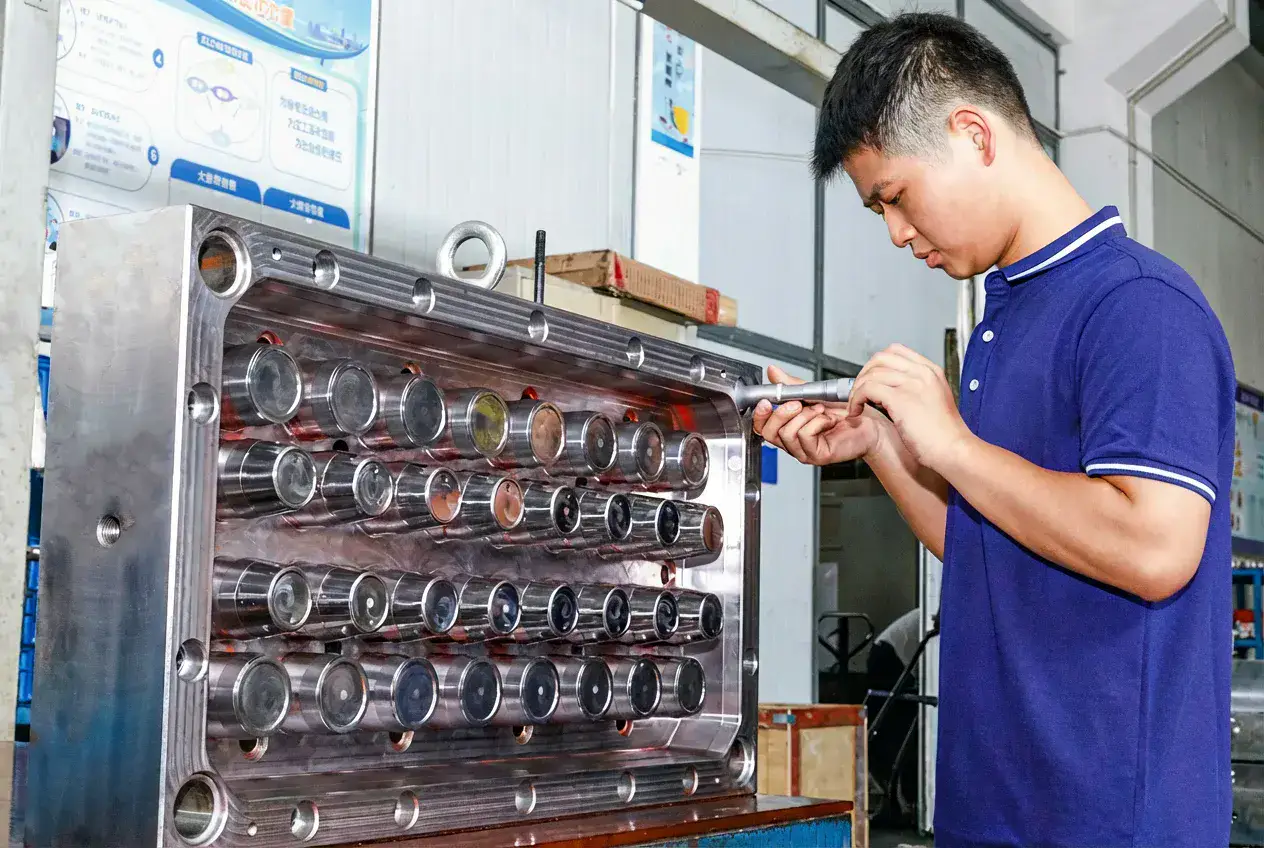
12-cavity milk tea cup mold with IML capability
Key Opportunities: Milk Tea Cup Sector
India's milk tea cup market is arguably the world's largest addressable opportunity for disposable cup manufacturers. First, the branded chai chain revolution is converting traditional kulhad (clay cup) and glass usage to branded disposable PP cups at an estimated 15-20% conversion rate, representing billions of cups annually. Chai Point alone serves 500,000+ cups daily. Second, the broader Indian QSR and quick-service beverage market including Cafe Coffee Day (1,700+ outlets), Starbucks India (400+ outlets), and thousands of juice bars requires disposable cups in massive quantities. Third, India's railway catering system (Indian Railway Catering and Tourism Corporation, IRCTC) serves an estimated 25+ million passengers daily, representing enormous institutional cup demand. Milk tea cups at 0.45mm wall thickness weighing 8-12g are the optimal specification for Indian chai. A production line with 8-cavity mold on the SPV5-380 delivers 6,400 cups per hour, but India's market volume justifies multiple lines. Even large Indian converters including Parle Agro, Uflex, and Huhtamaki India face capacity constraints.
Import Regulations and Certification Requirements
India classifies injection molding machinery under HS code 8477.10 with standard import duty (BCD) of 7.5% plus IGST of 18% on assessable value. The effective duty rate after set-off is approximately 7.5% on machinery value. For units in Special Economic Zones (SEZs), machinery imports are completely duty-free. The Production Linked Incentive (PLI) scheme for advanced manufacturing may provide additional benefits. Food-contact packaging must comply with FSSAI (Food Safety and Standards Authority of India) regulations, specifically the Food Safety and Standards (Packaging and Labelling) Regulations, and BIS (Bureau of Indian Standards) IS 10146 for polyolefin moldings for food contact. ISI mark may be required for certain food packaging categories. Electrical supply in India is 415V/50Hz three-phase. Power quality varies by state, with Gujarat, Maharashtra, and Tamil Nadu having the most reliable industrial supply. Import documentation requires commercial invoice, packing list, bill of lading, certificate of origin, BIS registration certificate (if applicable), and FSSAI compliance documentation. HWAMDA provides CE certificates and India-specific compliance documentation.
Key Specs
- •India classifies injection molding machinery under HS code 8477.10 with standard import duty (BCD) of 7.5% plus IGST of 18% on assessable value.
- •The effective duty rate after set-off is approximately 7.5% on machinery value.
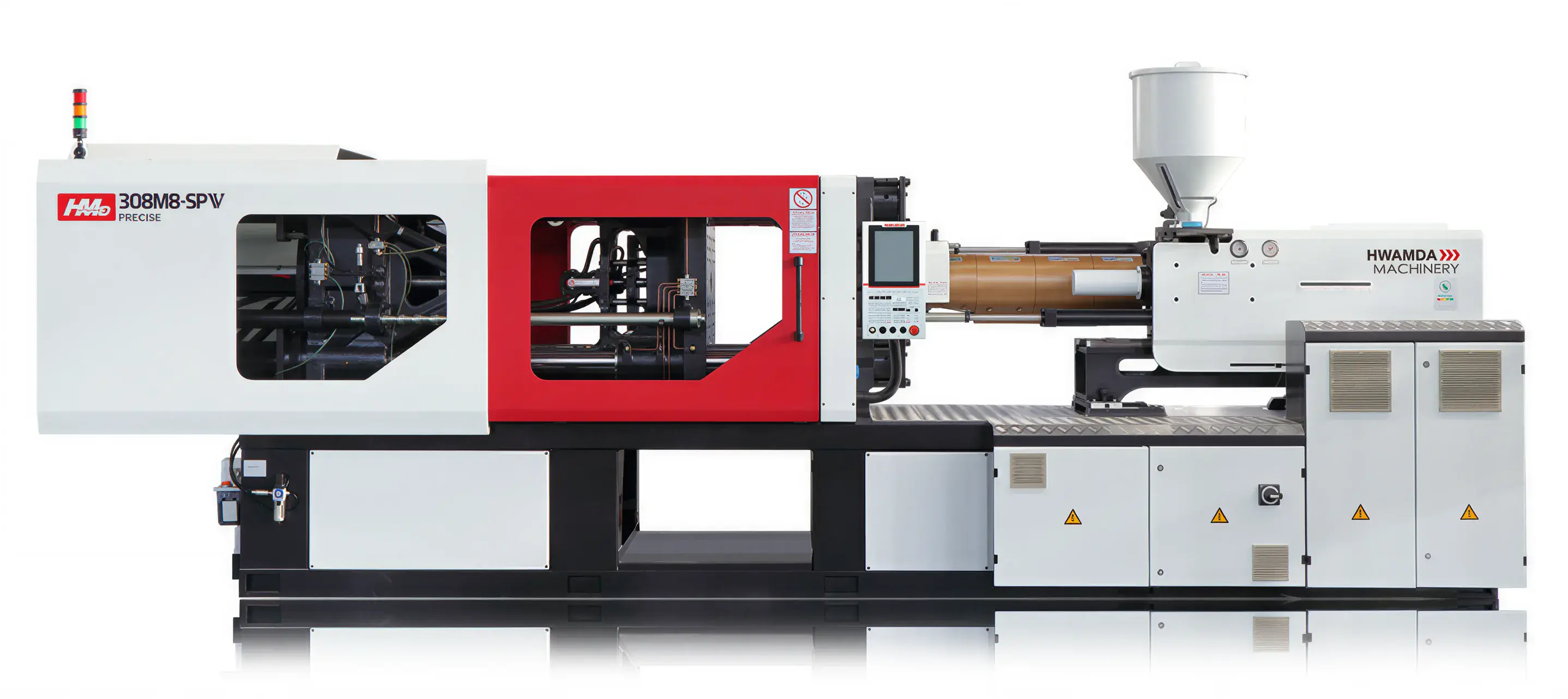
SPV5 high-speed machine for milk tea cup production
Need Expert Advice?
Talk to our engineers about your specific production requirements. Free consultation.
HWAMDA Equipment for This Market
For India's milk tea cup market, HWAMDA recommends the HMD 380M8-SPV (3,800 kN) as the primary platform, with 1,080 x 1,060 mm platen accommodating 8-cavity chai cup molds. The machine delivers injection speed exceeding 370 mm/s with 164-165 MPa injection pressure, optimized for 0.45mm wall thickness PP cups. The recommended configuration is an 8-cavity 200ml chai cup mold in 2344 steel with valve gate hot runner, producing 8g cups at 4-4.5 second cycle times, matching the standard Indian cutting chai and full chai serving sizes. For larger cups (350-500ml) used by branded chains like Chaayos and Chai Point, a 4-cavity mold is recommended. The complete line includes the SPV5 machine, cup mold, SWITEK SW8 take-out robot, XC-LF10A industrial chiller, vacuum hopper loader, and conveyor with counting system. Energy consumption of 1.0-1.2 kWh/kg is competitive with Indian-made machines from L&T Demag or Windsor at significantly lower capital cost. The INOVA controller supports connectivity for India's PLI scheme compliance where applicable.
Logistics and After-Sales Support
HWAMDA ships to India from Ningbo Port to Nhava Sheva (Mumbai, 12-16 days), Chennai (14-18 days), or Mundra (Gujarat, 12-15 days) via direct services from COSCO, MSC, and Evergreen. Western Indian ports serve the major plastics manufacturing hubs in Maharashtra and Gujarat. The milk tea cup line ships in one 40-foot container. Indian customs clearance typically takes 3-7 days with proper documentation and GST registration. HWAMDA's India service presence provides installation and commissioning within 7-10 days of equipment arrival. Training covers 5 days including machine operation, mold changeover, process optimization for Indian PP resin grades, and maintenance procedures. Spare parts delivery from Ningbo reaches Indian ports in 12-16 days by sea or 3-5 days by air freight to Mumbai or Delhi. HWAMDA is developing an Indian spare parts warehouse through its local service partner. HWAMDA provides 24-month machine warranty and 12-month mold warranty. Technical support via WhatsApp at +86-159-5888-5672 and +86-158-2458-0266 provides responsive communication with engineers experienced in Indian market conditions.
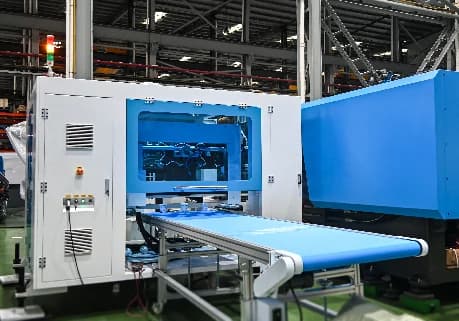
Automatic packing and stacking system
Getting Started: Investment and ROI
Total investment for a complete HWAMDA milk tea cup line for India ranges from USD 165,000 to USD 245,000 (approximately INR 1.4-2.1 crore), including the HMD 380M8-SPV machine (USD 78,000-100,000), 8-cavity chai cup mold (USD 12,000-18,000), SWITEK robot (USD 12,000-18,000), chiller, loader, and auxiliaries. In Indian SEZs, machinery imports are duty-free. At 8-cavity running 4-second cycles with 82% OEE, output reaches 5,904 cups per hour or approximately 42.8 million annually. Production cost per 200ml chai cup: PP resin INR 0.65-0.85 (at Indian PP at INR 95,000-110,000/MT), energy INR 0.10, labor INR 0.05, mold amortization INR 0.05, totaling approximately INR 0.85-1.05 (USD 0.010-0.013) per cup. Indian market prices for disposable chai cups range from INR 1.5-3.0 (USD 0.018-0.036), yielding gross margins of 40-65%. At mid-range pricing, annual gross profit exceeds INR 3 crore (USD 360,000). Equipment payback: 12-18 months. Multiple lines are recommended for the Indian market scale. Contact sales@hwamdaglobal.com.
Frequently Asked Questions
HWAMDA SPV5 machines are priced 15-25% below equivalent Indian-made thin-wall machines from L&T Demag, Windsor, or Ferromatik at comparable speed specifications. The HMD 380M8-SPV at USD 78,000-100,000 delivers 370+ mm/s injection speed and 4-4.5 second cycle times, matching or exceeding Indian alternatives. Key advantages include the Italian INOVA controller, higher injection speed for thin-wall applications, and the complete turnkey solution including mold and robot from a single supplier.
Related Guides
Ready to Start Your Project?
Get a free consultation and quotation for your thin-wall packaging production line.
Join 500+ manufacturers in 60+ countries who trust HWAMDA.
Get Free Quote