Kenya's Injection Molding Industry and Growth Trajectory
Kenya's plastics industry has grown at 8-10% annually over the past five years, driven by urbanization (4.3% annual rate), population growth, and increasing consumer packaged goods penetration. The country has approximately 50-60 injection molding companies producing food packaging, with total plastics processing estimated at 350,000-400,000 tonnes per year. Key packaging manufacturers include Superfoam Ltd (Nairobi, with 20+ injection molding machines), Statpack Industries, Techpak Industries (Athi River), Complast Industries (Nairobi), and Packaging Industries (Thika). Import dependency for injection molding machinery exceeds 90%, with Chinese brands dominant in volume. Indian machines (Windsor, Milacron India) also have presence due to historical trade connections. European machines (ENGEL, KraussMaffei) exist in premium dairy applications but are being challenged by Chinese alternatives. Kenya serves as the gateway to the East African Community (EAC) market including Uganda, Tanzania, Rwanda, and Burundi, with tariff-free trade under the EAC customs union. This regional access amplifies the market opportunity beyond Kenya's domestic 56 million population.
Key Specs
- •Kenya's plastics industry has grown at 8-10% annually over the past five years, driven by urbanization (4.3% annual rate), population growth, and increasing consumer packaged goods penetration.
- •The country has approximately 50-60 injection molding companies producing food packaging, with total plastics processing estimated at 350,000-400,000 tonnes per year.
- •Import dependency for injection molding machinery exceeds 90%, with Chinese brands dominant in volume.
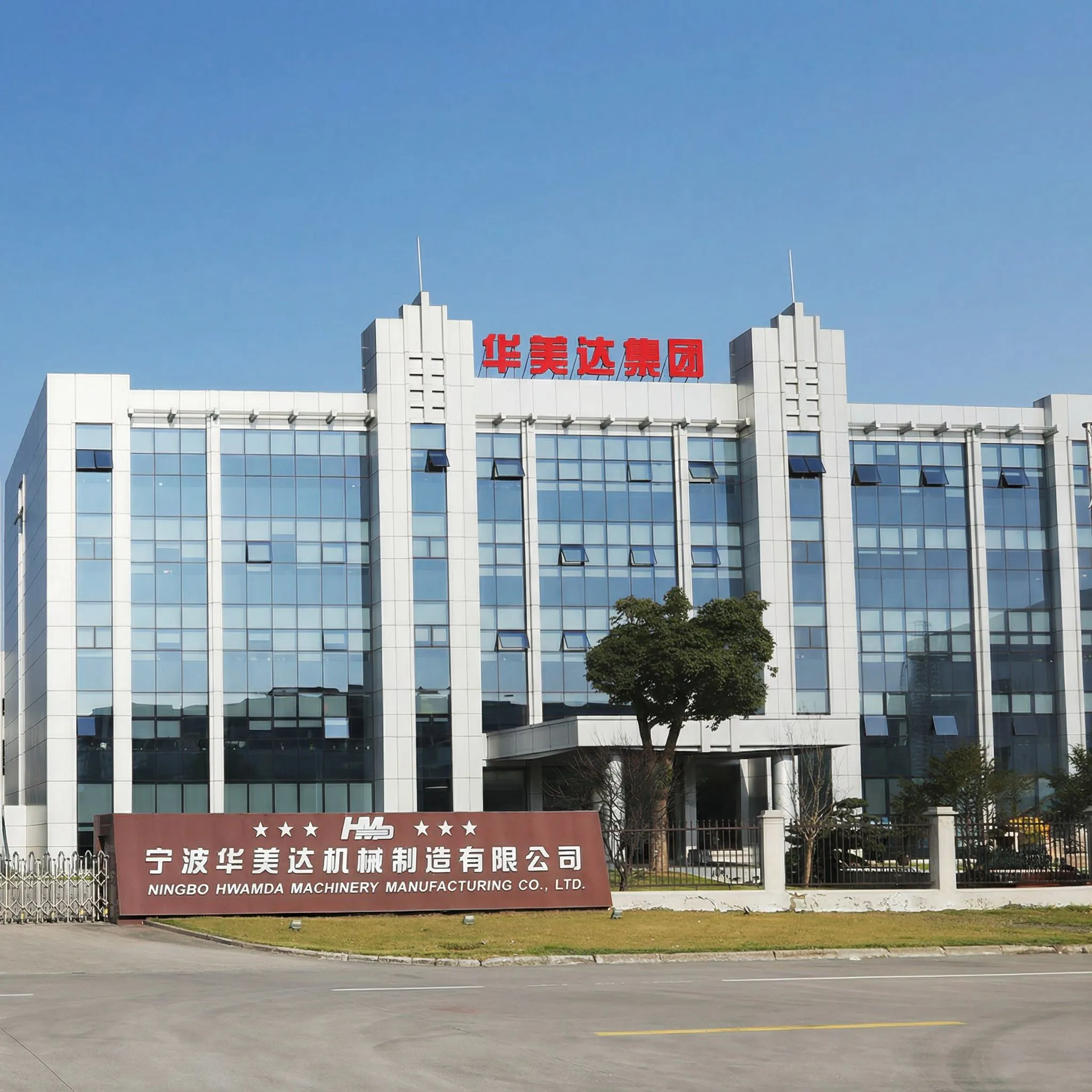
HWAMDA manufacturing facility — 20+ years of expertise
SPV5 Machine Selection for Kenyan Market Requirements
Kenyan production requirements favor reliable, energy-efficient machines that perform in challenging infrastructure conditions. The HMD 380M8-SPV (3800kN, 400mm/s) is the recommended workhorse for yogurt cup and dairy container production, handling 8-12 cavity molds at 3.5-4.5 second cycles for cups weighing 4-8g. The HMD 270M8-SPV (2700kN, 368mm/s) suits lighter products including cutlery at 3-4g in 16-24 cavity molds and sauce cups at 2-4g in 16-32 cavity configurations. For larger food containers at 15-25g, the HMD 450M8-SPV provides 4500kN clamping. Operating on Kenya's 415V/3-phase/50Hz standard, the SPV5's servo-hydraulic drive consuming 1.0-1.2 kWh/kg provides essential cost savings at Kenya's electricity rates of KES 16-20/kWh (USD 0.12-0.15). The INOVA controller includes voltage fluctuation compensation and automatic restart sequencing for grid stability issues. Machine foundation requirements of 150mm reinforced concrete are achievable in Kenya's standard industrial parks including Athi River Industrial Park, Tatu City Industrial Park, and Nairobi's Industrial Area.
Turnkey Packages Scaled for East African Market
HWAMDA configures packages appropriate for Kenyan investment capacity and market scale. Entry-level package: HMD 270M8-SPV with 16-cavity cutlery mold, single-axis robot, air-cooled chiller, and basic auxiliaries at USD 130,000-175,000. This produces approximately 14,400 cutlery pieces per hour and represents the lowest entry point for thin-wall production in East Africa. Standard dairy package: HMD 380M8-SPV with 8-cavity yogurt cup mold, SWITEK 3-axis robot, process chiller (20kW), dehumidifying dryer, and material conveyor at USD 185,000-250,000. Output: approximately 5,500-6,400 cups per hour at 4-4.5 second cycles. Premium multi-product package: HMD 450M8-SPV with interchangeable mold sets (yogurt cups, food containers, tableware) enabling product flexibility at USD 240,000-320,000. Mold changeover takes 2-4 hours with HWAMDA's quick-change system. For all packages, HWAMDA includes voltage stabilizer, spare parts starter kit, and extended remote support as standard inclusions for East African installations.
Key Specs
- •Output: approximately 5,500-6,400 cups per hour at 4-4.5 second cycles.
- •Mold changeover takes 2-4 hours with HWAMDA's quick-change system.
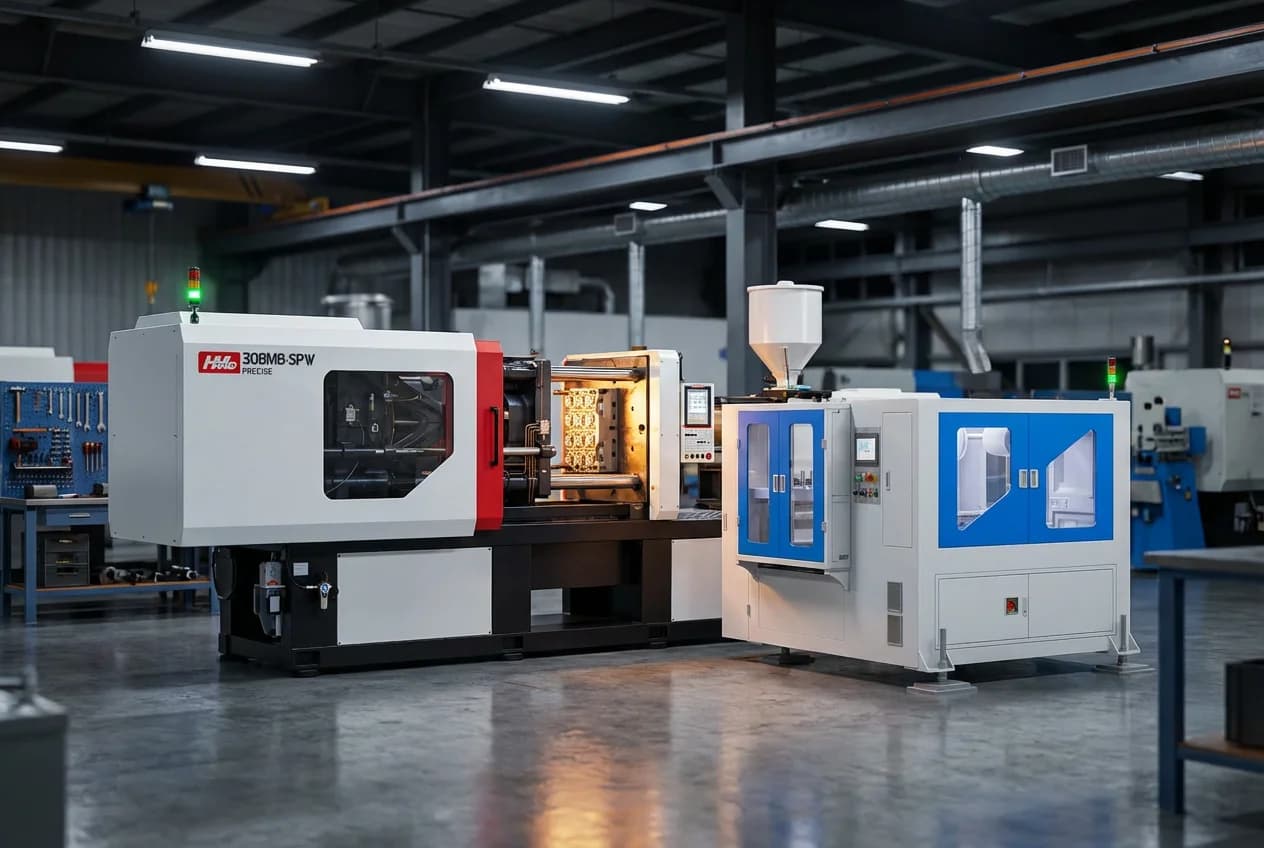
Complete SPV5 production line ready for shipment
Need Expert Advice?
Talk to our engineers about your specific production requirements. Free consultation.
PVOC Certification and Kenya Import Procedures
Kenyan import regulations require Pre-export Verification of Conformity (PVOC) for industrial machinery under the Kenya Standards Act. The PVOC inspection is conducted at HWAMDA's factory in China by a KEBS-appointed inspection body (SGS, Bureau Veritas, Intertek, or CCIC) before shipment. The inspection verifies safety compliance, product specifications match documentation, and packaging integrity. Cost: approximately USD 1,500-2,500 per shipment. SPV5's CE marking documentation provides the foundation for PVOC compliance, as CE standards are recognized within the assessment framework. KEBS (Kenya Bureau of Standards) import standardization mark is issued upon successful PVOC. Additional Kenyan import requirements include: Import Declaration Form (IDF) filed with KRA (Kenya Revenue Authority), customs bond or duty payment at 10% for HS 8477 plus 16% VAT, certificate of origin for preferential treatment assessment, and Environmental Impact Assessment (EIA) may be required for new factory establishment. For operations in EPZ (Export Processing Zones) or Special Economic Zones (SEZ), duty exemptions apply. Kenyan EPZs in Athi River, Mombasa, and Nairobi provide 10-year tax holidays and duty-free machinery imports for export-oriented manufacturers.
Production Economics in the East African Context
Kenyan production economics reflect the developing market's cost structure. A standard SPV5-380 yogurt cup line at USD 185,000-250,000 produces approximately 3.4 million cups monthly at 80% OEE running 20 hours/day (conservative for Kenya's power schedule). Monthly PP cost at 6g per cup and USD 1,300/MT landed (including 10% duty): USD 26,500. Energy cost at 1.1 kWh/kg and USD 0.13/kWh: approximately USD 3,200. Labor for 3-shift operation with 2 operators and 1 packer per shift at average KES 30,000-50,000/month (USD 230-385/month): USD 2,500-4,200 monthly. Maintenance, overhead, and mold amortization: approximately USD 3,000-4,000. Total monthly operating cost: approximately USD 38,000-42,000. Yogurt cup wholesale pricing in Kenya ranges KES 1.5-3.5 (USD 0.012-0.027) per cup, generating monthly revenue of approximately USD 40,800-91,800. At mid-range pricing of USD 0.018/cup, monthly revenue reaches USD 61,200, providing operating margin of 30-38%. Payback period: 12-18 months. For producers serving the broader EAC market (Uganda, Tanzania, Rwanda), export volumes extend payback acceleration.
Key Specs
- •A standard SPV5-380 yogurt cup line at USD 185,000-250,000 produces approximately 3.4 million cups monthly at 80% OEE running 20 hours/day (conservative for Kenya's power schedule).
- •Monthly PP cost at 6g per cup and USD 1,300/MT landed (including 10% duty): USD 26,500.
- •At mid-range pricing of USD 0.018/cup, monthly revenue reaches USD 61,200, providing operating margin of 30-38%.
HWAMDA equipment installed at customer facility
Logistics and Service Support for Kenya and East Africa
HWAMDA ships to Mombasa port (Kenya's primary international cargo port) with 25-30 day direct transit from Shanghai. Machines are cleared through Mombasa customs or transferred to Nairobi's Inland Container Depot (ICD) via the Standard Gauge Railway (SGR) for efficient final delivery to the capital region. For Uganda, Tanzania, and Rwanda customers, transit through Mombasa with overland delivery is the standard routing. KRA customs clearance requires approximately 5-10 working days with proper documentation. HWAMDA's on-site commissioning team arrives within 2 weeks of machine delivery, completing installation (5-7 days) and operator training (10-14 days). English-speaking commissioning engineers simplify communication in Kenya's bilingual (English/Swahili) business environment. After-sales remote support via 4G-connected INOVA controller reaches Kenyan operators within 8 hours. On-site emergency service deploys within 5-7 days. Spare parts delivery via air freight to JKIA (Nairobi) takes 7-10 days. PPPEXPO East Africa (Nairobi, annual) is the region's leading plastics and packaging exhibition. HWAMDA maintains agent representation in Nairobi for pre-sales consultation, spare parts coordination, and local technical support referrals.
Frequently Asked Questions
Yes. Kenya's EAC membership provides tariff-free access to Uganda, Tanzania, Rwanda, and Burundi markets totaling 300+ million people. Machines installed in Kenya can produce packaging for export throughout East Africa with zero internal tariffs. HWAMDA ships through Mombasa port, which also serves as the gateway for overland delivery to all EAC countries. For Uganda-based customers, transit through Kenya is the standard import route.
Related Guides
Ready to Start Your Project?
Get a free consultation and quotation for your thin-wall packaging production line.
Join 500+ manufacturers in 60+ countries who trust HWAMDA.
Get Free Quote