

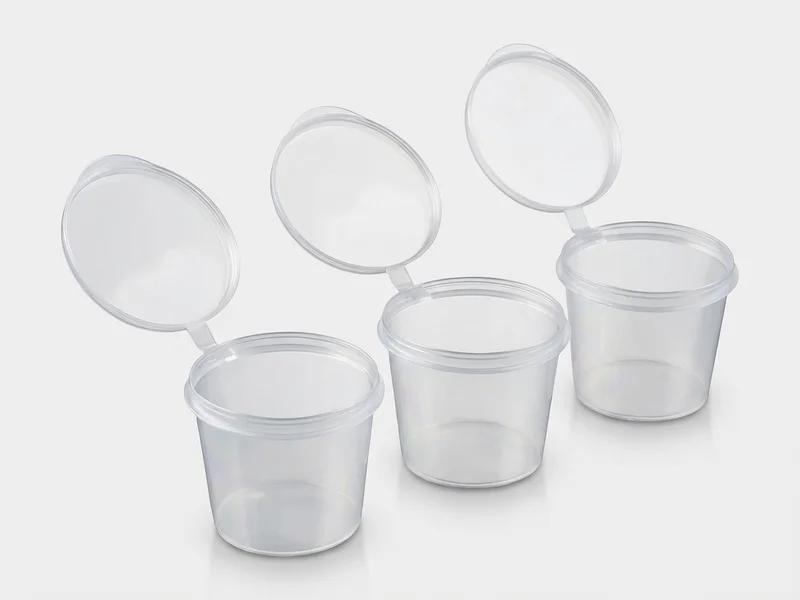
Sauce Cup Market Demand in South Korea
South Korea is the world's highest per-capita instant noodle consumer, with over 80 packs per person annually, each requiring condiment cups. Korean food giants including Nongshim, Samyang, and Ottogi consume billions of sauce cups for ramyeon seasoning, gochujang paste, and soup base packaging. The convenience store sector, dominated by CU, GS25, and 7-Eleven Korea with over 50,000 stores, requires enormous volumes of small-format condiment cups for kimbap, dosirak (lunchbox), and ready-to-eat meal packaging. South Korea's growing food export market, driven by the Korean Wave boosting global demand for K-food, creates additional sauce cup demand for export-packed products. Korean food packaging requires precise weight control, clean aesthetics, and compatibility with high-speed automated filling lines. Local machine builders LS Mtron and Woojin Plaimm compete in this space, but HWAMDA offers comparable quality at lower capital cost. The growing demand across both traditional retail and modern foodservice channels creates a sustained need for high-volume, cost-efficient sauce cups production equipment. Local manufacturers who invest in high-speed thin-wall injection molding gain competitive advantage over both imported finished products and local competitors using slower conventional equipment.
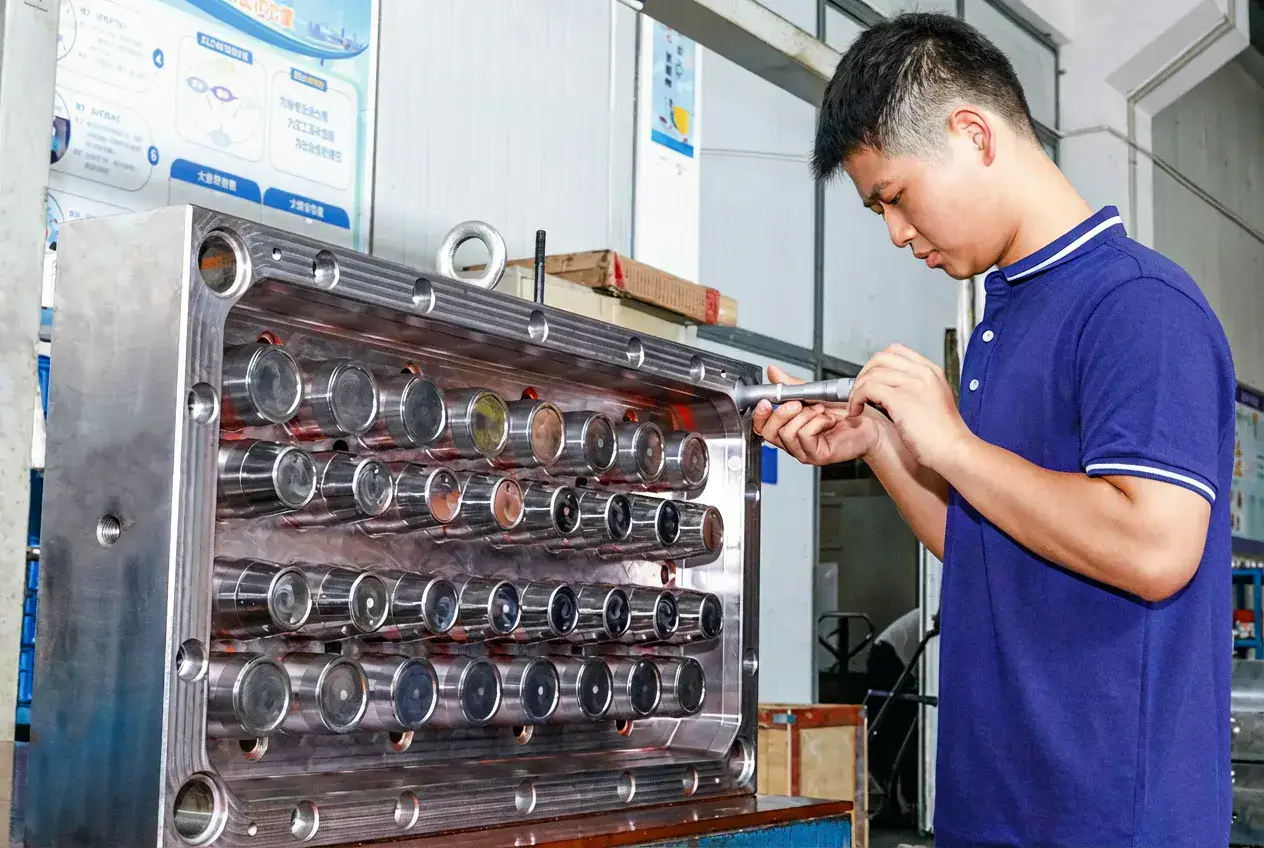
32-cavity high-speed sauce cup mold — 3 second cycle time
Recommended Machine: HMD 270M8-SPV (270-280T)
The HMD 270M8-SPV for South Korea is configured with 380V/60Hz power standard for Korean industrial zones. The 2700-2800 kN clamping force system delivers injection speeds exceeding 400 mm/s for 32-cavity filling within 0.2-0.3 seconds. Shot weight repeatability within 0.5% meets Korean food packaging precision requirements. Energy consumption of 3.0-4.0 kWh/kg is competitive at Korean industrial electricity rates of KRW 100-130/kWh from KEPCO. The machine features Korean language HMI and KC (Korea Certification) compliance documentation. The compact footprint suits Korean industrial park factory layouts where space efficiency matters. HWAMDA's SPV5 control system provides SPC monitoring and data logging compatible with Korean food safety management systems. The servo-hydraulic system provides the fast response and precise control Korean converters expect from modern injection molding equipment. The machine's robust construction includes a hardened steel platen surface with T-slot pattern for secure mold clamping, precision-ground tie bars for uniform force distribution, and a centralized automatic lubrication system that extends component life while reducing maintenance labor requirements. The servo pump controller provides real-time hydraulic pressure feedback for closed-loop shot control accuracy.
Mold Configuration: 32-Cavity for South Korea
HWAMDA's 32-cavity sauce cup mold for South Korea produces formats aligned with Korean food industry standards, including 10-45 mL condiment cups for instant noodle seasoning, gochujang portions, and dipping sauce containers. The valve-gate hot runner system ensures balanced filling with cavity-to-cavity weight variation below 1.2%, meeting Korean conglomerate quality specifications. H13 steel inserts at 52 HRC with high-polish surfaces produce cups meeting Korean visual quality standards for convenience store and retail packaging. Cooling design achieves rapid heat extraction for consistent 3-4 second cycles. For Korean instant noodle applications, cup rim profiles are designed for heat-seal compatibility with aluminum foil or PP film lidding at speeds of 200+ cups per minute on Korean filling lines. HWAMDA offers 16-cavity and 24-cavity alternatives for larger condiment containers or initial lower-volume production. HWAMDA's mold engineering team provides comprehensive DFM (Design for Manufacturability) analysis before mold production begins, optimizing gate location, cooling channel layout, and ejection strategy for the specific sauce cups geometry. All molds undergo full dimensional inspection and trial production at HWAMDA's factory before shipment.
Key Specs
- •The valve-gate hot runner system ensures balanced filling with cavity-to-cavity weight variation below 1.2%, meeting Korean conglomerate quality specifications.
- •Cooling design achieves rapid heat extraction for consistent 3-4 second cycles.
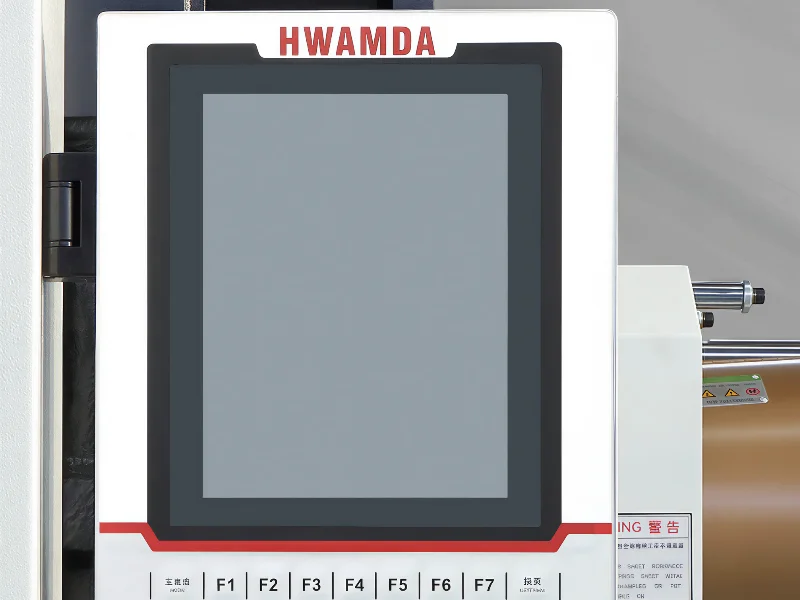
INOVA controller with precision process monitoring
Need Expert Advice?
Talk to our engineers about your specific production requirements. Free consultation.
Production Capacity and Output Planning
The 32-cavity configuration at 3-4 second cycles produces 28,800-38,400 cups per hour. Korean operations running 22 hours daily reach 633,600-844,800 cups per day, with annual capacity of 190-253 million cups per machine. Korean food companies serving the instant noodle market typically install 4-10 machines for billion-cup annual volumes. HWAMDA's production planning for Korean installations targets 92-95% OEE, consistent with Korean manufacturing standards. PP resin supply comes from domestic Korean producers including LG Chem, Lotte Chemical, and SK Chemicals at competitive pricing. Material consumption of 30-80 kg/hour per machine keeps raw material logistics manageable. HWAMDA provides layout engineering for multi-machine Korean production facilities, optimizing material flow, finished goods handling, and maintenance access. HWAMDA provides a detailed production capacity spreadsheet customized for each customer's operating schedule, accounting for planned maintenance windows, shift changeover time, and mold change frequency. The capacity model includes sensitivity analysis showing output variation across different cycle time scenarios to help customers plan their commercial commitments accurately.
Investment Budget and ROI for This Market
A HWAMDA sauce cup line for South Korea costs approximately KRW 170-220 million ($125,000-160,000) including machine, 32-cavity mold, and auxiliaries. This represents 35-45% savings compared to equivalent Korean-manufactured LS Mtron or Woojin Plaimm systems. At 200 million cups annually with conversion margins of KRW 8-15 per cup, annual gross revenue reaches KRW 1.6-3.0 billion ($1.2-2.2 million). Korean operating costs include KEPCO electricity at KRW 100-130/kWh, domestic PP at KRW 1,500,000-1,800,000/tonne, and labor at KRW 2.5-3.5 million/month per operator. Equipment payback is achievable within 8-14 months, among the fastest returns in HWAMDA's market portfolio. Wire transfers in USD or KRW are accepted through Korean banks. HWAMDA's competitive pricing reflects the company's focused specialization in thin-wall injection molding rather than general-purpose machinery, enabling manufacturing efficiencies and application expertise that reduce total cost of ownership for sauce cups production applications. The entire system is designed for 24/7 continuous operation with minimal operator intervention, reducing labor requirements while maximizing production consistency and quality output.
Key Specs
- •This represents 35-45% savings compared to equivalent Korean-manufactured LS Mtron or Woojin Plaimm systems.
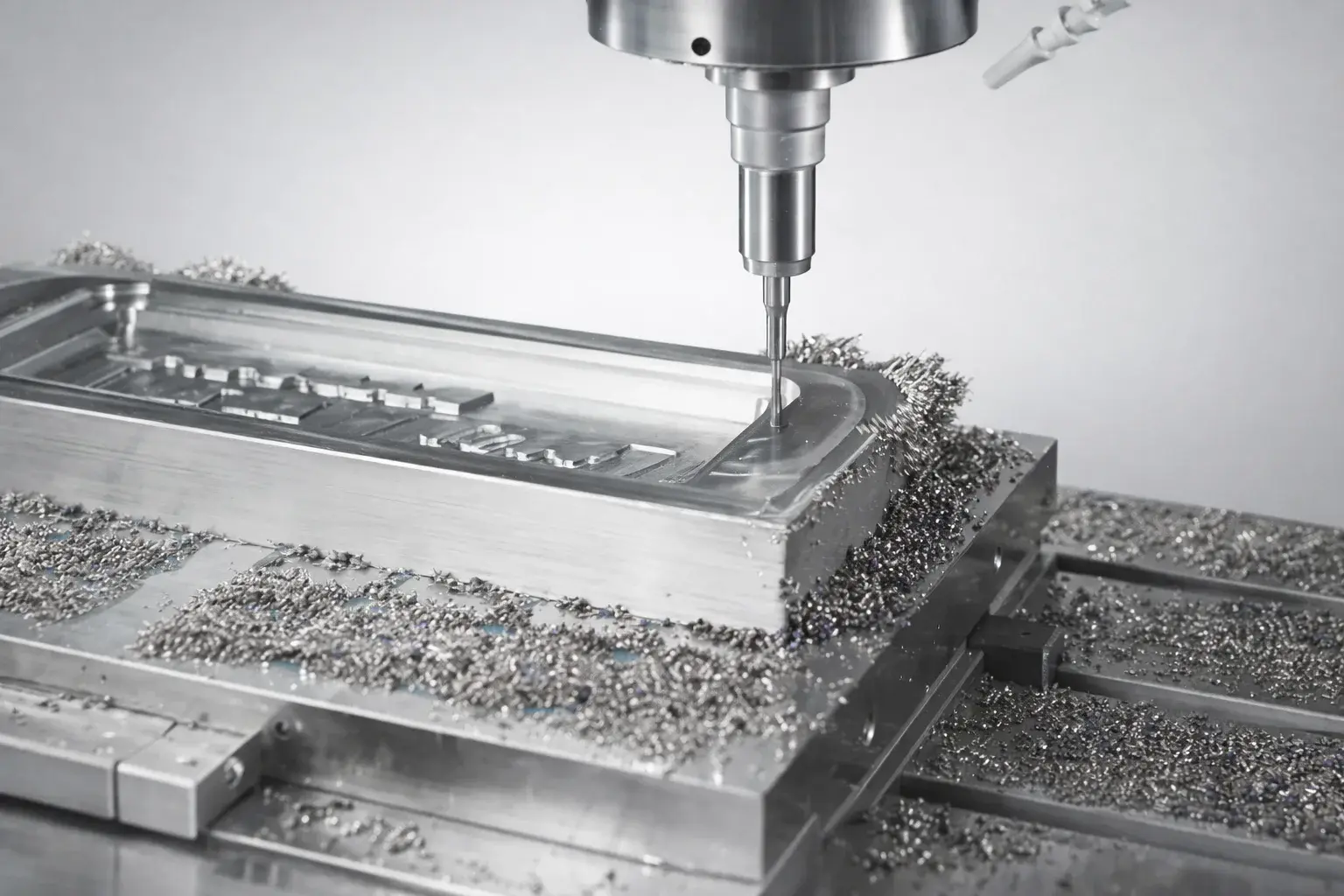
Optimized cooling channel design for rapid heat extraction
Logistics and Local Support
HWAMDA ships to South Korea through Busan and Incheon ports with transit from Ningbo averaging 3-5 days, the shortest route in HWAMDA's export network. The compact equipment ships in a single 20-foot container. Korean customs clearance is efficient with modest duty rates. HWAMDA maintains Korean market support through an agent providing Korean language communication, technical coordination, and spare parts logistics from a Korean warehouse. Two HWAMDA engineers provide 5-7 days of installation with Korean language support. Spare parts delivery from Chinese stock takes 2-3 days to Korean addresses. The minimal time zone difference between China and Korea facilitates responsive remote support. HWAMDA assigns a dedicated project manager to each order, providing weekly status updates during manufacturing and coordinating all logistics milestones from factory testing through delivery and installation completion. Post-installation support includes a 90-day production optimization period with priority remote engineering access. The entire system is designed for 24/7 continuous operation with minimal operator intervention, reducing labor requirements while maximizing production consistency and quality output.
Frequently Asked Questions
Yes. HWAMDA's 32-cavity molds achieve cavity-to-cavity weight variation below 1.2% and dimensional tolerances within plus or minus 0.02 mm, meeting quality specifications from Nongshim, Samyang, and other Korean food conglomerates. HWAMDA provides factory acceptance testing data and sample cups for customer quality approval before shipment. Multiple Korean food packaging companies operate HWAMDA equipment as approved suppliers. HWAMDA maintains comprehensive technical files and test reports for all machines and molds, available upon request for regulatory and quality audit purposes. Contact HWAMDA's sales team for detailed specifications and quotation tailored to your specific sauce cups production requirements and local market conditions.
Related Guides
Ready to Start Your Project?
Get a free consultation and quotation for your thin-wall packaging production line.
Join 500+ manufacturers in 60+ countries who trust HWAMDA.
Get Free Quote