

PET Properties and Advantages for Food Packaging
PET is a semi-crystalline polyester with melting point of 250-265C, glass transition temperature of 67-80C, and density of 1.33-1.40 g/cm3. For thin-wall injection molding, PET offers several unique advantages: exceptional clarity (light transmission >89%, haze <2% in amorphous state, superior to both GPPS and PPR), excellent oxygen barrier (0.03-0.04 cc*mm/m2/day/atm at 23C, approximately 10x better than PP), good moisture barrier, and FDA/EU food-contact compliance under 21 CFR 177.1630 and EU 10/2011. PET's outstanding recyclability (resin code 1, highest recycling rate of any plastic at 50%+ collection in the EU and 29% in the US) aligns with circular economy regulations. Food-grade recycled PET (rPET) is commercially available at USD 1,050-1,200/MT with supply increasing through bottle-to-packaging recycling loops. However, PET thin-wall injection molding is more challenging than PP: higher processing temperatures (270-290C), moisture sensitivity requiring drying to <0.005% (50 ppm), and risk of crystallization causing opacity if cooling is inadequate.
Key Specs
- •For thin-wall injection molding, PET offers several unique advantages: exceptional clarity (light transmission >89%, haze <2% in amorphous state, superior to both GPPS and PPR), excellent oxygen barrier (0.03-0.04 cc*mm/m2/day/atm at 23C, approximately 10x better than PP), good moisture barrier, and FDA/EU food-contact compliance under 21 CFR 177.1630 and EU 10/2011.
- •PET's outstanding recyclability (resin code 1, highest recycling rate of any plastic at 50%+ collection in the EU and 29% in the US) aligns with circular economy regulations.
- •However, PET thin-wall injection molding is more challenging than PP: higher processing temperatures (270-290C), moisture sensitivity requiring drying to <0.005% (50 ppm), and risk of crystallization causing opacity if cooling is inadequate.
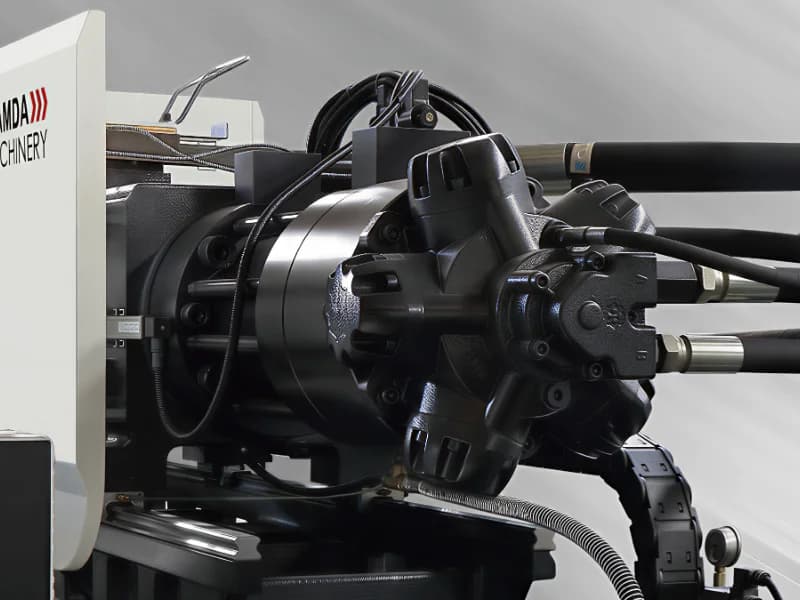
High-speed injection unit with linear guides
PET Grades for Thin-Wall Injection Molding
Thin-wall PET injection molding requires specific grade selection to ensure processability and maintain amorphous clarity. Standard injection-grade PET: intrinsic viscosity (IV) 0.74-0.80 dL/g, suitable for wall thickness 0.5-1.0mm. Key grades include Indorama Polyclear PET IV 0.80 (designed for injection molding), Eastman Chemical 9921 (IV 0.80, food-grade with excellent clarity), FENC C-PET A1 (Taiwanese supply, IV 0.76), and Equipolymers Lighter C93 (IV 0.80, European production). For thinner walls below 0.5mm, modified PET grades with higher flow characteristics are emerging but remain less established than PP alternatives. rPET for injection molding: food-grade recycled PET pellets from mechanical recycling (EFSA approved) or chemical recycling are available from Indorama Deja (IV 0.76-0.80), Alpla PET Recycling, and Veolia rPET. rPET pricing: USD 1,050-1,200/MT for food-grade, compared to virgin PET at USD 1,100-1,400/MT, making recycled content cost-neutral or even advantageous. PET prices have decreased from peaks due to recycled supply growth.
PET Processing on HWAMDA SPV5 Machines
PET thin-wall injection molding requires precise process control to maintain amorphous clarity and prevent thermal degradation. Pre-drying is critical: PET must be dried to <0.005% moisture (50 ppm) using a dehumidifying dryer at 160-170C for 4-6 hours with dewpoint of -40C or lower. Undried PET undergoes hydrolytic degradation, reducing IV and producing acetaldehyde (AA) that taints food flavor. SPV5 barrel temperature profile: zone 1 265-270C, zone 2 275-280C, zone 3 280-285C, nozzle 275-280C. Uniform melt temperature of 275-285C is essential; localized overheating above 290C accelerates thermal degradation and AA generation. Mold temperature: 10-20C for amorphous (clear) parts, using high cooling efficiency to quench the melt below Tg before crystallization can nucleate. Injection speed: 300-400mm/s on SPV5, with rapid fill required to prevent premature solidification. Injection pressure: 160-220 MPa. The SPV5's 220 MPa maximum provides adequate margin. Hold pressure: 40-60% for 0.3-0.6 seconds. Back pressure: 3-8 MPa (lower than PP to minimize shear heating). Screw speed: 100-150 RPM maximum to prevent excessive shear heating.
Key Specs
- •Pre-drying is critical: PET must be dried to <0.005% moisture (50 ppm) using a dehumidifying dryer at 160-170C for 4-6 hours with dewpoint of -40C or lower.
- •SPV5 barrel temperature profile: zone 1 265-270C, zone 2 275-280C, zone 3 280-285C, nozzle 275-280C.
- •Injection speed: 300-400mm/s on SPV5, with rapid fill required to prevent premature solidification.
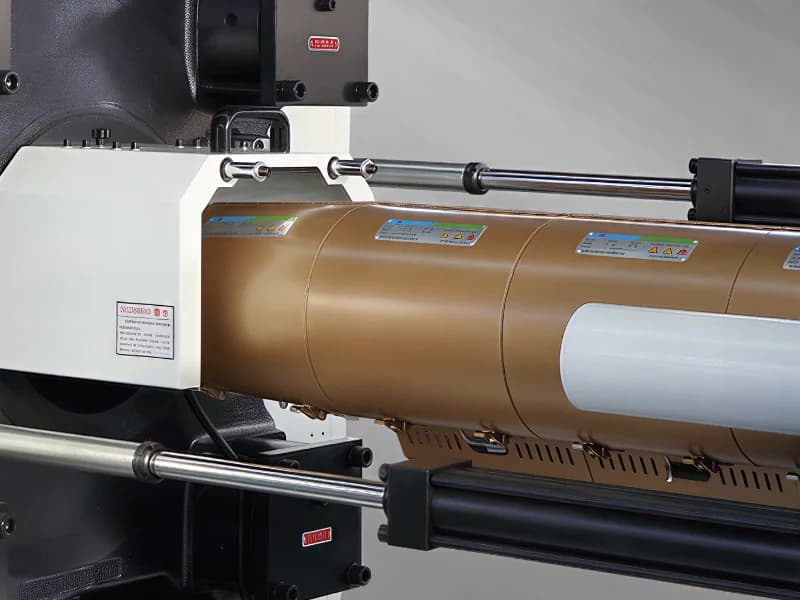
Servo-hydraulic drive system with energy recovery
Need Expert Advice?
Talk to our engineers about your specific production requirements. Free consultation.
Mold Design Considerations for PET Thin-Wall
PET thin-wall molds require specialized design features compared to PP molds. Cooling system: PET's narrow processing window between amorphous clarity (quench below Tg rapidly) and crystalline opacity requires extremely efficient cooling. Mold cooling channels should be positioned within 8-12mm of cavity surface with turbulent flow (Re >10,000) at 8-12C water temperature. Conformal cooling channels (possible with 3D-printed mold inserts) reduce cooling time by 20-30% compared to conventional drilling. Gate design: hot tip or valve gate with 1.0-1.5mm diameter for thin-wall PET; smaller gates risk excessive shear heating of the temperature-sensitive PET melt. Valve gates (Synventive or YUDO) eliminate gate vestige for premium appearance. Mold steel: H13 (48-52 HRC) or Stavax (52-54 HRC) for corrosion resistance, as PET processing generates trace acetic acid that can corrode mild steel mold surfaces. Venting: vent depth 0.010-0.015mm (shallower than PP at 0.015-0.025mm due to PET's lower melt viscosity at processing temperature). Part ejection: PET parts at amorphous state are flexible and resilient, enabling ejection at slightly higher temperatures than PP, partially offsetting the higher melt temperature requirement.
Applications: PET Thin-Wall vs. PP Thin-Wall
PET thin-wall injection molding targets applications where PP cannot match performance requirements. Premium transparent deli containers: PET clarity (<2% haze) exceeds GPPS (<3%) and clarified PPR (5-10%), providing the best product visibility for premium salad, sushi, and prepared meal packaging. On SPV5-450/480, 4-6 cavity PET deli containers at 15-25g, 0.5mm wall, 6-8 second cycles. Oxygen-sensitive food packaging: PET's O2 barrier (10x PP) extends shelf life for MAP (Modified Atmosphere Packaging) applications. Dairy cups requiring extended shelf life (30+ days) benefit from PET versus PP's 14-21 day limit without barrier coatings. Sauce cups and condiment containers: 2-4g PET sauce cups at 0.4mm wall thickness in 16-24 cavity molds on SPV5-270/280, 4-5 second cycles. PET's barrier prevents flavor scalping that occurs with PP. Recycled content packaging: brands targeting 30-50% recycled content commitments find PET packaging easier to implement than PP, given rPET's superior supply chain, food-contact approvals, and cost-neutral pricing. Trade-off: PET is 40-50% heavier than PP for equivalent part geometry due to higher density (1.35 vs 0.90 g/cm3).
Key Specs
- •Premium transparent deli containers: PET clarity (<2% haze) exceeds GPPS (<3%) and clarified PPR (5-10%), providing the best product visibility for premium salad, sushi, and prepared meal packaging.
- •On SPV5-450/480, 4-6 cavity PET deli containers at 15-25g, 0.5mm wall, 6-8 second cycles.
- •Oxygen-sensitive food packaging: PET's O2 barrier (10x PP) extends shelf life for MAP (Modified Atmosphere Packaging) applications.
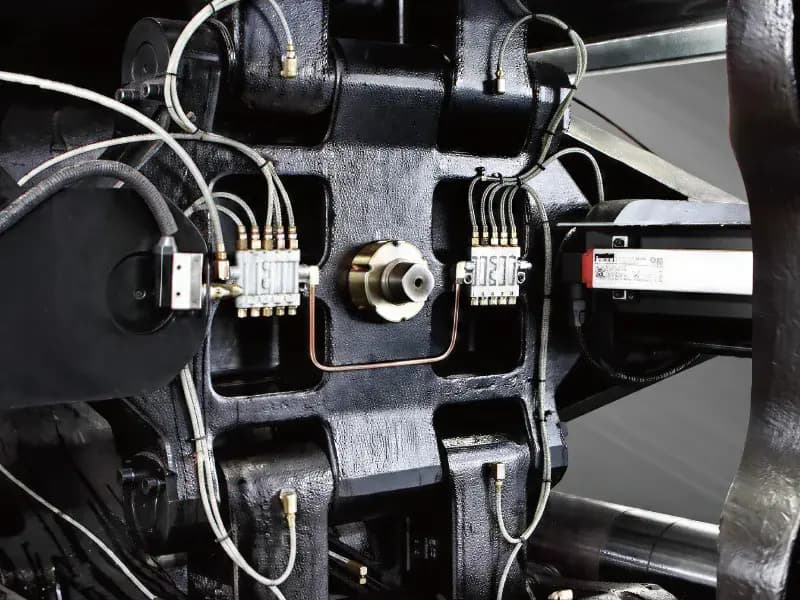
Toggle clamping unit — high rigidity for thin-wall molding
rPET Processing and Circular Economy Compliance
Processing recycled PET (rPET) on HWAMDA SPV5 machines requires specific parameter adjustments. Food-grade rPET pellets (EFSA or FDA approved) typically have IV 0.74-0.78 dL/g, slightly lower than virgin PET. Adjust processing accordingly: reduce barrel temperature by 3-5C compared to virgin PET to minimize further IV loss, increase drying time to 5-7 hours (rPET may absorb more moisture), and increase injection pressure by 5-10% to compensate for slightly higher melt viscosity. Acetaldehyde (AA) content must remain below 1 ppm in food-contact parts; SPV5 processing at optimized barrel temperatures with minimal melt residence time (<4 minutes) achieves AA levels of 3-8 ppm in the part, acceptable for most food applications except mineral water. Blend ratios of 30-50% rPET with virgin PET are common practice, balancing recycled content targets with consistent processing. EU Packaging and Packaging Waste Regulation (PPWR) mandates 10% recycled content in food-contact plastic packaging by 2030 and 50% by 2040. rPET offers the most straightforward compliance pathway due to established collection infrastructure, proven food-grade recycling technology (super-clean mechanical recycling and chemical recycling), and commercially available EFSA-approved grades.
Frequently Asked Questions
Yes, SPV5 machines process PET at barrel temperatures of 270-290C with injection speeds of 300-400mm/s. Key requirements: dehumidifying dryer achieving <50 ppm moisture, mold cooling at 10-20C for amorphous clarity, and 220 MPa injection pressure capability (SPV5 standard). IV-grade PET at 0.74-0.80 dL/g is suitable. The INOVA controller's precise temperature management prevents thermal degradation that causes acetaldehyde generation above safe food-contact limits.
Related Guides
Ready to Start Your Project?
Get a free consultation and quotation for your thin-wall packaging production line.
Join 500+ manufacturers in 60+ countries who trust HWAMDA.
Get Free Quote