

PS Material Types: GPPS vs. HIPS for Food Packaging
General-purpose polystyrene (GPPS) is an amorphous thermoplastic with exceptional optical clarity (light transmission >88%, haze <3%), high stiffness (flexural modulus 2,800-3,400 MPa, approximately 2x PP homopolymer), and excellent dimensional stability due to low shrinkage of 0.4-0.6%. GPPS density is 1.04-1.06 g/cm3, approximately 15% heavier than PP. Glass transition temperature (Tg) is 90-100C, defining the maximum use temperature. High-impact polystyrene (HIPS) contains 5-12% polybutadiene rubber phase that improves impact strength to 5-12 kJ/m2 (Izod, ISO 180) versus <2 kJ/m2 for GPPS, at the cost of transparency (HIPS is opaque). Both grades are FDA 21 CFR 177.1640 compliant and EU 10/2011 approved for food contact. PS carries resin identification code 6 with limited recycling infrastructure compared to PP (code 5) and PET (code 1). For thin-wall injection molding, PS offers the advantage of being amorphous, meaning no crystallization phase during cooling, enabling shorter cooling times versus semi-crystalline PP at equivalent wall thickness.
Key Specs
- •General-purpose polystyrene (GPPS) is an amorphous thermoplastic with exceptional optical clarity (light transmission >88%, haze <3%), high stiffness (flexural modulus 2,800-3,400 MPa, approximately 2x PP homopolymer), and excellent dimensional stability due to low shrinkage of 0.4-0.6%.
- •GPPS density is 1.04-1.06 g/cm3, approximately 15% heavier than PP.
- •High-impact polystyrene (HIPS) contains 5-12% polybutadiene rubber phase that improves impact strength to 5-12 kJ/m2 (Izod, ISO 180) versus <2 kJ/m2 for GPPS, at the cost of transparency (HIPS is opaque).
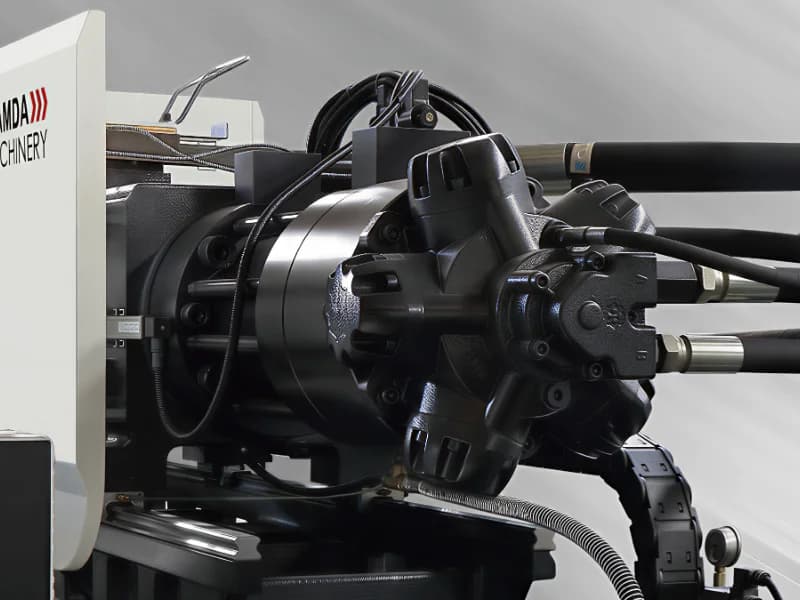
High-speed injection unit with linear guides
PS Grade Selection for Thin-Wall Applications
Thin-wall PS food packaging requires grades with MFI of 10-30+ g/10min (200C/5kg, ISO 1133) for reliable flow in 0.4-0.5mm wall sections. GPPS grades for transparent containers: Styrolution PS 158K (MFI 12, general purpose), Ineos Styrenics C350 (MFI 8, high gloss), Total Energies Crystal PS 1540 (MFI 15, food grade), Chi Mei PG-33 (MFI 14, widely available in Asia), and SABIC PS 125 (MFI 7, high stiffness). HIPS grades for opaque tableware: Styrolution PS 486M (MFI 3.5, high impact), Ineos Styrenics H660 (MFI 5, balance properties), and Chi Mei PH-888J (MFI 7, food grade). For thin-wall production below 0.5mm, GPPS grades with MFI 12-20 provide adequate flow. Higher-MFI GPPS grades (20-30) exist but may have reduced mechanical properties. PS pricing as of 2025 averages USD 1,290-1,490/MT in the US market, EUR 1,400-1,600/MT in Europe, and USD 1,100-1,300/MT in Asia. PS offers 10-20% cost advantage over PP in some regions while providing superior stiffness, making thinner walls possible for the same structural performance.
PS Processing Parameters on SPV5 Machines
PS processing differs significantly from PP due to its amorphous nature and higher glass transition temperature. Barrel temperature profile: zone 1 (feed) 180-190C, zone 2 200-220C, zone 3 220-240C, zone 4 (nozzle) 230-250C. PS is sensitive to thermal degradation above 260C, producing styrene monomer gas and yellowing. Keep melt residence time under 5 minutes. Mold temperature: 20-50C for GPPS (lower for cycle speed, higher for surface gloss), 30-60C for HIPS. Injection speed: 250-380mm/s for thin-wall PS on the SPV5, generally 10-15% lower than PP speeds because PS has higher melt viscosity at equivalent MFI designation due to different test conditions (200C/5kg versus 230C/2.16kg for PP). Injection pressure: 120-180 MPa, lower than PP due to PS's better flow characteristics in thin sections once above Tg. Hold pressure: 30-50% of injection pressure for 0.3-0.6 seconds. Back pressure: 5-10 MPa (lower than PP). Key processing advantage: PS has zero crystallization, so cooling is governed purely by heat conduction to reach ejection temperature of 60-70C. This typically allows 0.3-0.5 second shorter cooling times than PP at equivalent wall thickness.
Key Specs
- •Injection speed: 250-380mm/s for thin-wall PS on the SPV5, generally 10-15% lower than PP speeds because PS has higher melt viscosity at equivalent MFI designation due to different test conditions (200C/5kg versus 230C/2.16kg for PP).
- •Injection pressure: 120-180 MPa, lower than PP due to PS's better flow characteristics in thin sections once above Tg.
- •Hold pressure: 30-50% of injection pressure for 0.3-0.6 seconds.
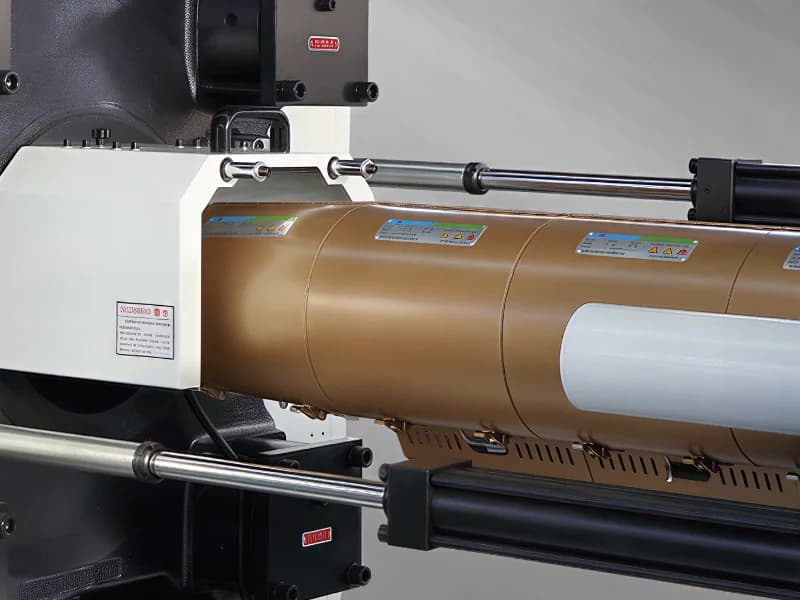
Servo-hydraulic drive system with energy recovery
Need Expert Advice?
Talk to our engineers about your specific production requirements. Free consultation.
Applications: Transparent Containers and Disposable Tableware
GPPS transparent containers are widely used for deli packaging, bakery display cases, salad containers, and fruit/berry punnets where product visibility drives consumer purchase decisions. On HWAMDA SPV5 machines, typical GPPS container production: 400ml deli container at 12-18g, 0.45-0.5mm wall, 4-6 cavity mold on SPV5-450/480, cycle time 5-7 seconds, producing 2,060-4,320 containers per hour. Clarity advantage: GPPS at <3% haze versus clarified PPR at 5-10% provides visually superior product presentation. HIPS disposable tableware production: forks/spoons at 3-5g, 0.4mm wall, 24-48 cavity on SPV5-270/320, cycle time 3-4 seconds, producing 21,600-57,600 pieces per hour. HIPS plates at 6-10g, 8-16 cavity on SPV5-320, cycle time 4-5 seconds. For cups (drinking cups, cold-beverage cups), GPPS provides clarity while HIPS provides impact resistance for vending applications. Thermoformed PS dominates large-volume cup production, but injection-molded PS cups at 4-8 cavity on SPV5-270/320 serve markets requiring custom shapes, thick rims, or interlocking stackability features not achievable in thermoforming.
PS vs. PP: Technical Comparison for Thin-Wall Packaging
The PS versus PP material selection decision involves multiple trade-offs. Stiffness: GPPS flexural modulus 2,800-3,400 MPa versus PP homopolymer 1,200-1,600 MPa. PS provides equivalent structural rigidity at 15-25% thinner walls, reducing material cost per part despite higher per-kg resin price. Impact resistance: PP (especially PPC) significantly exceeds PS; critical for drop-test performance in logistics. Temperature resistance: PP HDT 90-110C versus GPPS Tg 90-100C; PP handles hot-fill applications better. Transparency: GPPS >88% transmission, <3% haze versus clarified PPR 85% transmission, 5-10% haze. GPPS wins on clarity. Chemical resistance: PP superior to PS for lipid-containing foods (fats, oils); PS may craze or stress-crack with fatty foods at elevated temperatures. Recyclability: PP (code 5) has better recycling infrastructure and market than PS (code 6). Environmental regulations increasingly favor PP. Processing: PS shorter cooling times (no crystallization) but narrower processing window. PP wider processing window and more forgiving. Shrinkage: PS 0.4-0.7% versus PP 1.5-3.0%. PS provides tighter dimensional tolerances, critical for lid-container fit applications. Cost per part: depends on wall thickness optimization; PS can be cheaper per part if wall reduction offsets higher per-kg cost.
Key Specs
- •Stiffness: GPPS flexural modulus 2,800-3,400 MPa versus PP homopolymer 1,200-1,600 MPa.
- •PS provides equivalent structural rigidity at 15-25% thinner walls, reducing material cost per part despite higher per-kg resin price.
- •Transparency: GPPS >88% transmission, <3% haze versus clarified PPR 85% transmission, 5-10% haze.
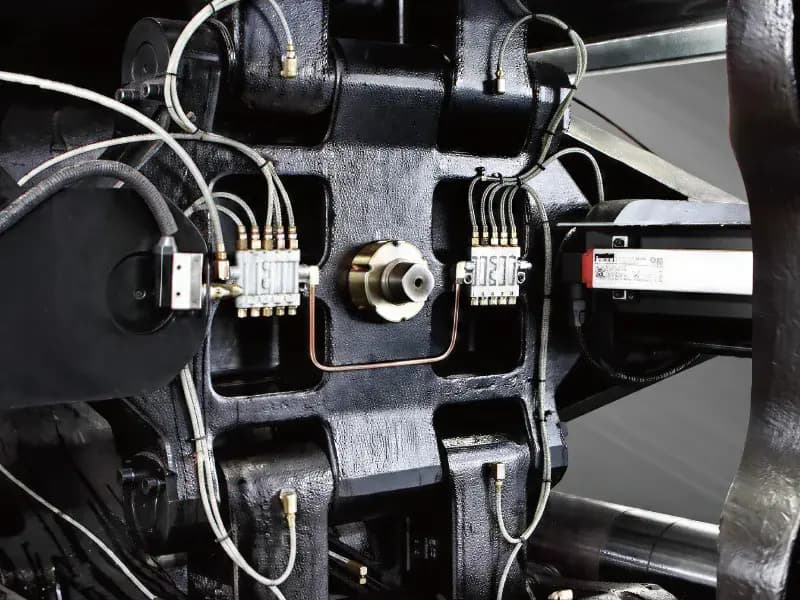
Toggle clamping unit — high rigidity for thin-wall molding
Regulatory Status and Environmental Considerations for PS
PS faces increasing regulatory pressure in several markets that must be factored into investment decisions. The EU Single-Use Plastics Directive (2019/904) restricts expanded polystyrene (EPS) food containers but does not specifically restrict injection-molded PS tableware, though individual EU member states may implement broader restrictions. France has banned certain PS food containers. Several US states and cities have banned EPS food packaging with some extending restrictions to solid PS. China's plastic pollution plan targets single-use PS tableware reduction. However, injection-molded PS remains fully legal and widely used for food packaging in most global markets as of 2026. Food-contact compliance: GPPS and HIPS meet FDA 21 CFR 177.1640 and EU 10/2011 requirements. Overall migration limit: 10 mg/dm2. Specific migration of styrene monomer: maximum 0.05% residual in polymer. HWAMDA SPV5 machines process PS with standard barrel and screw configurations (no special screw geometry needed). For producers planning long-term investment, consider dual-material capability: the SPV5 processes both PS and PP without hardware changes, enabling product line transitions if regulatory environments shift toward PP dominance.
Frequently Asked Questions
GPPS provides superior clarity at <3% haze versus 5-10% for clarified PP random copolymer. GPPS flexural modulus of 2,800-3,400 MPa (2x PP) enables 15-25% thinner walls for equivalent rigidity, potentially reducing material cost per part. PS shrinkage of 0.4-0.7% (versus PP 1.5-3.0%) provides tighter dimensional tolerances for lid-container fit. Cooling times are 0.3-0.5 seconds shorter due to amorphous nature (no crystallization phase).
Related Guides
Ready to Start Your Project?
Get a free consultation and quotation for your thin-wall packaging production line.
Join 500+ manufacturers in 60+ countries who trust HWAMDA.
Get Free Quote