

PP Copolymer Types: Random vs. Impact Copolymer
PP copolymers are produced by incorporating ethylene comonomer into the polypropylene chain, creating two distinct material families with different properties. Random copolymer (PPR) contains 1-7% ethylene randomly distributed along the polymer chain, disrupting crystallinity to produce transparency (haze <15% at 1mm thickness versus >40% for PP homopolymer), lower melting point (135-155C versus 160-170C), and improved impact resistance at low temperatures (Izod impact >5 kJ/m2 at 0C versus <2 kJ/m2 for homopolymer). Impact copolymer (PPC), also called heterophasic copolymer or block copolymer, contains 5-25% ethylene-propylene rubber (EPR) phase dispersed in a PP homopolymer matrix. PPC provides exceptional impact resistance (Izod >20 kJ/m2 at 23C) and low-temperature toughness (no brittle failure at -20C) but is opaque. For thin-wall food packaging, PPR is used for transparent containers where visual product display is valued, while PPC is used for cold-chain packaging requiring freeze-thaw durability. PP homopolymer remains preferred for standard opaque dairy cups where maximum stiffness-to-weight ratio is prioritized.
Key Specs
- •Random copolymer (PPR) contains 1-7% ethylene randomly distributed along the polymer chain, disrupting crystallinity to produce transparency (haze <15% at 1mm thickness versus >40% for PP homopolymer), lower melting point (135-155C versus 160-170C), and improved impact resistance at low temperatures (Izod impact >5 kJ/m2 at 0C versus <2 kJ/m2 for homopolymer).
- •Impact copolymer (PPC), also called heterophasic copolymer or block copolymer, contains 5-25% ethylene-propylene rubber (EPR) phase dispersed in a PP homopolymer matrix.
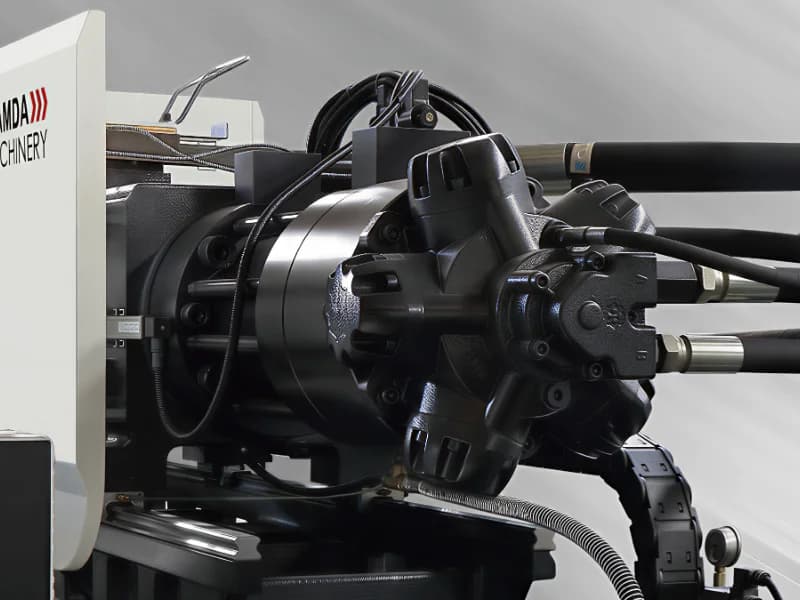
High-speed injection unit with linear guides
Random Copolymer Grades for Transparent Thin-Wall Packaging
High-clarity PP random copolymer grades for thin-wall production combine optical transparency with high flow characteristics. Leading grades include Borealis RJ377MO (MFI 30, haze <12% at 1mm, designed for thin-wall food containers), LyondellBasell Moplen RP348R (MFI 25, excellent clarity and stiffness balance), Total Energies PPR 7210 (MFI 20, nucleated for fast crystallization), SABIC PP QR674K (MFI 40, ultra-high flow with clarifier for premium transparency), and Braskem RP141 (MFI 35, South American market availability). For HWAMDA SPV5 machines producing transparent food containers at 0.5mm wall thickness, specify PPR with MFI 25-40 g/10min. Higher MFI grades (35-40) are required for wall thickness below 0.45mm. Addition of clarifying agents such as Millad NX8000 (sorbitol-based) or Hyperform HPN-600ei (nonitol-based) at 0.15-0.30% loading reduces haze to <5% at 1mm and improves clarity to near-PS levels while maintaining PP's superior toughness and heat resistance. Clarified PPR pricing: approximately 5-10% premium over standard PPR at EUR 1,600-1,700/MT in Europe.
Impact Copolymer for Cold-Chain and Frozen Food Packaging
Impact PP copolymer excels in frozen food and cold-chain packaging where containers must withstand -20C to -40C storage without brittle fracture during handling. Key property requirements: Charpy impact strength >10 kJ/m2 at -20C (ISO 179), flexural modulus >900 MPa for adequate stiffness, and HDT >85C at 0.45 MPa for microwave reheating capability. Leading thin-wall PPC grades include Borealis BJ368MO (MFI 30, high impact with good flow), LyondellBasell Hifax TKC 1006N (MFI 25, specialized for thin-wall), SABIC PP BCC35 (MFI 35, balance of flow and impact), and ExxonMobil PP7033 (MFI 8, ultra-high impact for thick-wall applications, less suitable for thin-wall). For HWAMDA SPV5 thin-wall production, select PPC grades with MFI 25-35 g/10min. The rubber phase in PPC increases melt viscosity compared to homopolymer at equivalent MFI, requiring 5-10% higher injection pressure (typically 180-220 MPa) and 10-15C higher melt temperature (230-265C). Cycle times for PPC are typically 0.5-1.0 seconds longer than homopolymer due to slower crystallization kinetics. Target applications: ice cream containers, frozen meal trays, cold-chain yogurt cups for export markets.
Key Specs
- •Key property requirements: Charpy impact strength >10 kJ/m2 at -20C (ISO 179), flexural modulus >900 MPa for adequate stiffness, and HDT >85C at 0.45 MPa for microwave reheating capability.
- •The rubber phase in PPC increases melt viscosity compared to homopolymer at equivalent MFI, requiring 5-10% higher injection pressure (typically 180-220 MPa) and 10-15C higher melt temperature (230-265C).
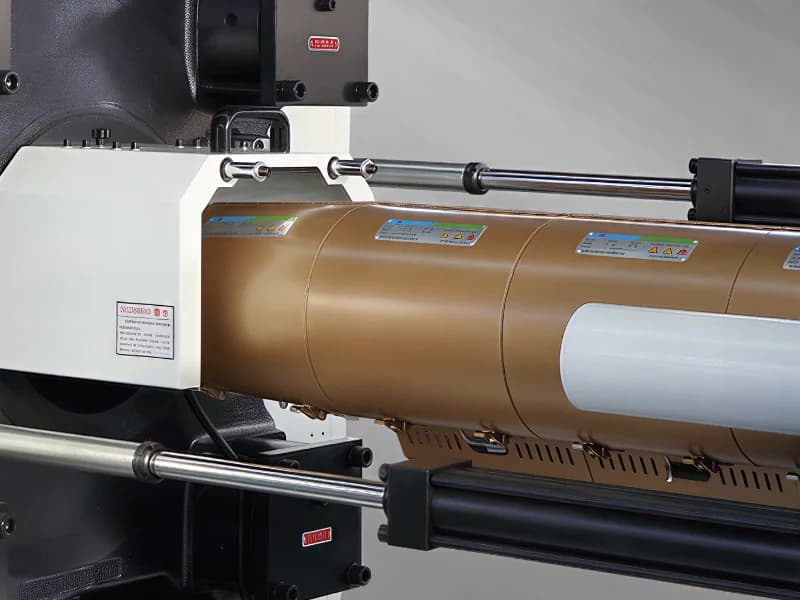
Servo-hydraulic drive system with energy recovery
Need Expert Advice?
Talk to our engineers about your specific production requirements. Free consultation.
Processing Parameters: PPR and PPC on SPV5 Machines
PP copolymers require modified processing parameters compared to PP homopolymer. For PPR (random copolymer): barrel temperatures 210-240C (10-15C lower than homopolymer due to lower melting point), mold temperature 15-30C for clarity optimization (higher mold temperatures increase crystallinity and reduce transparency), injection speed 300-400mm/s (similar to homopolymer), and hold pressure 35-55% of injection pressure for 0.3-0.6 seconds. The lower crystallization temperature of PPR (100-115C versus 120-130C for homopolymer) means slightly longer cooling times: add 0.3-0.5 seconds to homopolymer baseline. For PPC (impact copolymer): barrel temperatures 230-265C (higher than homopolymer to fully melt the rubber phase), mold temperature 25-40C, injection speed 280-380mm/s (slightly lower due to higher melt viscosity of the rubber phase), and hold pressure 45-65% for 0.4-0.8 seconds. Screw design considerations: barrier screws with 23:1 L/D ratio (standard on SPV5) provide adequate mixing for PPR but may require increased back pressure of 12-18 MPa for PPC to ensure complete rubber phase dispersion. Decompression of 4-6mm prevents drool for both copolymer types.
Application Selection Matrix: Homopolymer vs. Random vs. Impact
Selecting between PP homopolymer, random copolymer, and impact copolymer depends on application requirements. Opaque yogurt cups (standard dairy): PP homopolymer MFI 40-55, wall 0.4mm, cycle 3.5-4.5s on SPV5-380/400. Maximum stiffness-to-weight ratio, lowest material cost. Transparent food containers (deli, salad, prepared meals): PPR MFI 25-40 with clarifier, wall 0.5mm, cycle 5-7s on SPV5-450/480. Superior visual appeal, consumer can see product. Cold-chain dairy cups (export, frozen yogurt): PPC MFI 25-35, wall 0.45-0.5mm, cycle 5-6s on SPV5-380/400. Drop test survival at -20C without cracking. IML premium containers (margarine, butter, cream cheese): PPR MFI 30-40, wall 0.5mm, cycle 6-8s on SPV5-400/450 with IML automation. Transparency enhances label visual impact. Microwave-safe food containers: PP homopolymer or PPC, wall 0.5-0.6mm, HDT >100C for homopolymer. PPC preferred when freeze-microwave cycle is required. Material cost ranking: homopolymer (lowest) < impact copolymer (+5-8%) < random copolymer (+8-12%) < clarified random copolymer (+15-20%). Part weight impact: PPR and PPC require 5-10% thicker walls than homopolymer for equivalent stiffness due to lower flexural modulus.
Key Specs
- •Opaque yogurt cups (standard dairy): PP homopolymer MFI 40-55, wall 0.4mm, cycle 3.5-4.5s on SPV5-380/400.
- •Transparent food containers (deli, salad, prepared meals): PPR MFI 25-40 with clarifier, wall 0.5mm, cycle 5-7s on SPV5-450/480.
- •Cold-chain dairy cups (export, frozen yogurt): PPC MFI 25-35, wall 0.45-0.5mm, cycle 5-6s on SPV5-380/400.
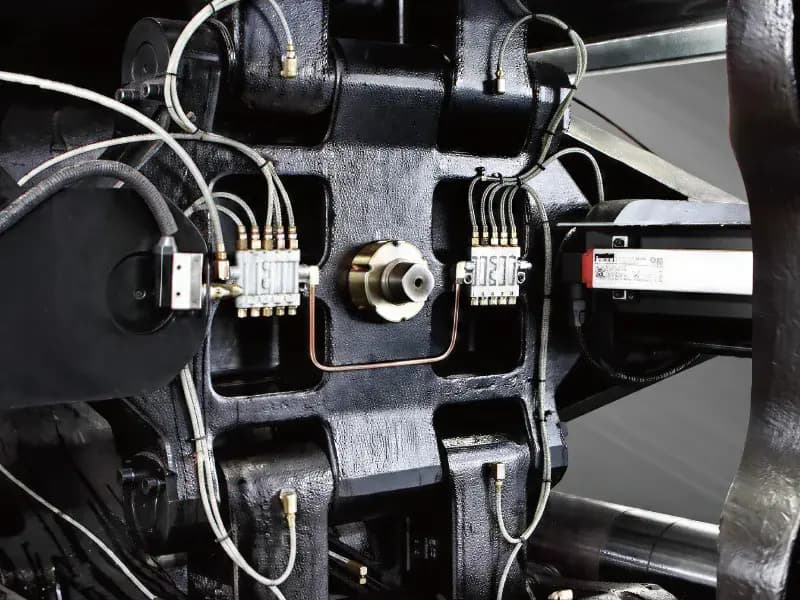
Toggle clamping unit — high rigidity for thin-wall molding
Quality Control and Testing Methods for PP Copolymers
Incoming material quality control for PP copolymers ensures consistent thin-wall production. Critical incoming inspection tests: MFI verification (ISO 1133, +/-10% tolerance from datasheet nominal), moisture content (Karl Fischer method, maximum 0.05% for thin-wall processing), and density check (ISO 1183, confirms correct grade received). For PPR transparency applications, additional testing includes haze measurement (ASTM D1003, maximum specification per application), and gloss measurement (ASTM D2457 at 60 degrees, minimum 80 GU for premium clarity). Production quality control: wall thickness measurement using ultrasonic gauge (precision +/-0.01mm) at minimum 4 points per part, weight check (+/-0.3g tolerance for parts under 10g), visual inspection for flow marks, haze inconsistency, and gate vestige, and top-load compression test (minimum 30N for yogurt cups). For food-contact compliance, each PP copolymer lot requires Certificate of Compliance from the resin supplier confirming EU 10/2011 or FDA 21 CFR 177.1520 compliance, including specific migration testing results for antioxidants (Irganox 1010, Irgafos 168) typically present in food-grade PP. Overall migration must not exceed 10 mg/dm2. HWAMDA's INOVA controller logs all process parameters per shot for SPC analysis and traceability.
Frequently Asked Questions
Use PPR when transparency is required (deli containers, salad boxes, premium dairy) achieving haze <15% versus >40% for homopolymer. With clarifying agents (Millad NX8000), haze drops below 5%. PPR also provides better impact resistance at refrigerator temperatures (5C). Trade-offs: 8-12% higher material cost, 5-10% thicker walls needed for equivalent stiffness, and 0.3-0.5 second longer cycle times due to slower crystallization.
Related Guides
Ready to Start Your Project?
Get a free consultation and quotation for your thin-wall packaging production line.
Join 500+ manufacturers in 60+ countries who trust HWAMDA.
Get Free Quote