Ethiopia Food Packaging Market Overview
Ethiopia's food packaging market is valued at approximately USD 1.5 billion in 2025, with rigid plastic packaging growing at 10 to 14% CAGR, among the fastest rates globally. The country's GDP of approximately USD 155 billion supports Africa's second-largest population of 126 million, with rapid urbanization driving the transition from loose food sales to packaged products. Ethiopia's dairy sector is undergoing transformation, with the government's Livestock Master Plan targeting a tripling of dairy production by 2030. Major dairy companies including Mama Dairy, Lame Dairy, Holland Dairy, Family Milk, and Shola Dairy are expanding production capacity and investing in modern packaging. Addis Ababa and its surrounding Oromia Special Zone concentrate most of the country's dairy processing and packaging manufacturing. Ethiopia's industrial parks program, with facilities in Hawassa, Mekelle, Kombolcha, and Bole Lemi near Addis Ababa, provides incentives for manufacturing investment including duty-free import of capital goods. PP resin is imported through Djibouti port at approximately USD 1,400 to 1,600 per metric ton, reflecting the additional inland transport cost. Chinese manufacturers already dominate Ethiopia's industrial equipment market, with strong relationships built through Belt and Road Initiative infrastructure projects.
Key Specs
- •Ethiopia's food packaging market is valued at approximately USD 1.5 billion in 2025, with rigid plastic packaging growing at 10 to 14% CAGR, among the fastest rates globally.
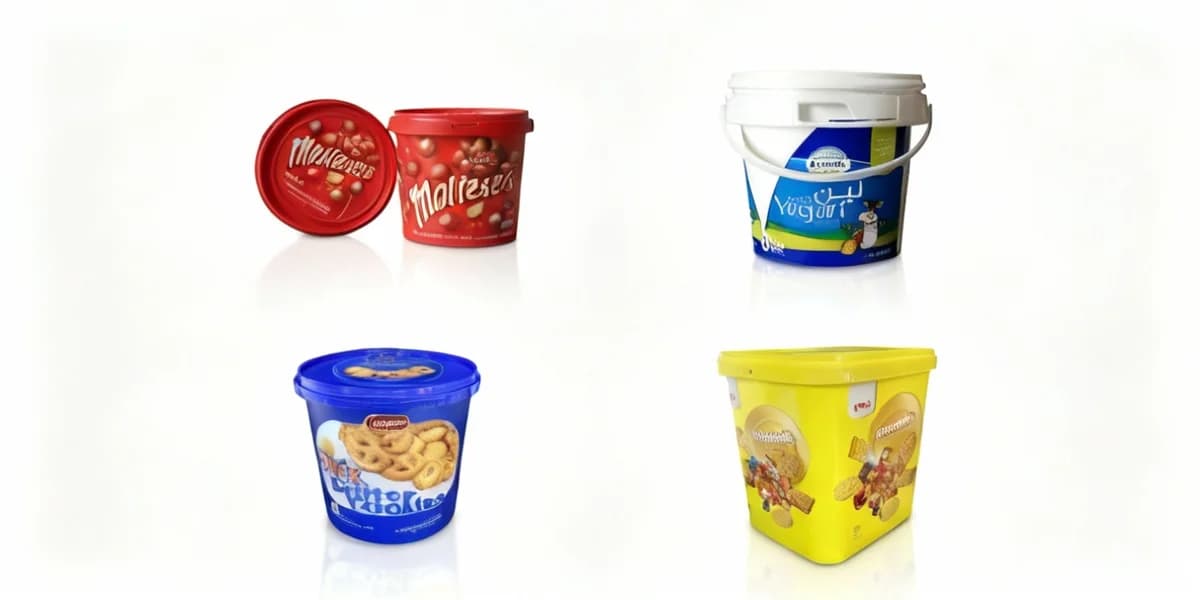
Complete yogurt pail production line with IML
Key Opportunities: Yogurt Pail Sector
Ethiopia's yogurt pail market is in its early growth stage, currently estimated at 80 to 150 million units annually but projected to triple within 5 years as the dairy value chain modernizes. Traditional ergo (yogurt) and ayib (cottage cheese) are dietary staples consumed across all income levels. The transition from clay pots and plastic bags to rigid PP pails is accelerating in urban areas, driven by modern retail expansion through chains including Shoa Supermarket, Fantu Supermarket, and the emerging Addis Ababa Mall complex. Part weights range from 25 to 45 grams at 0.6 mm wall thickness in food-grade PP. The Ethiopian government's focus on import substitution for dairy products, including the restriction of powdered milk imports to encourage local processing, is creating demand for packaging capacity that outstrips current supply. Several international development organizations including the Bill and Melinda Gates Foundation and SNV Netherlands Development Organisation are investing in Ethiopia's dairy value chain, often providing matching funds for processing and packaging equipment. The competitive landscape for packaging machinery is limited, with few established suppliers and significant room for a committed equipment partner.
Import Regulations and Certification Requirements
Injection molding machines enter Ethiopia under HS code 8477.10, with import duties of 5% on CIF value for industrial machinery, plus 15% VAT. However, enterprises operating in Ethiopian Industrial Parks enjoy duty-free import of capital goods and raw materials, plus income tax holidays of up to 10 years. Outside industrial parks, the Ethiopian Investment Commission (EIC) issues investment permits that qualify manufacturing equipment for customs duty exemptions. Food-contact packaging must comply with the Ethiopian Standards Agency (ESA) requirements, which reference Codex Alimentarius guidelines. The standards enforcement infrastructure is still developing, and CE certification on HWAMDA machines is readily accepted. Ethiopia requires a Conformity Assessment for imported goods, typically conducted by the Ethiopian Conformity Assessment Enterprise (ECAE). HWAMDA coordinates this process with experienced freight forwarders familiar with Ethiopian import procedures. All goods enter Ethiopia through Djibouti port with inland transport via truck or the Addis Ababa-Djibouti Railway (completed 2018), adding 3 to 5 days to the delivery timeline. Documentation is provided in English, Ethiopia's international business language.
Key Specs
- •Injection molding machines enter Ethiopia under HS code 8477.10, with import duties of 5% on CIF value for industrial machinery, plus 15% VAT.
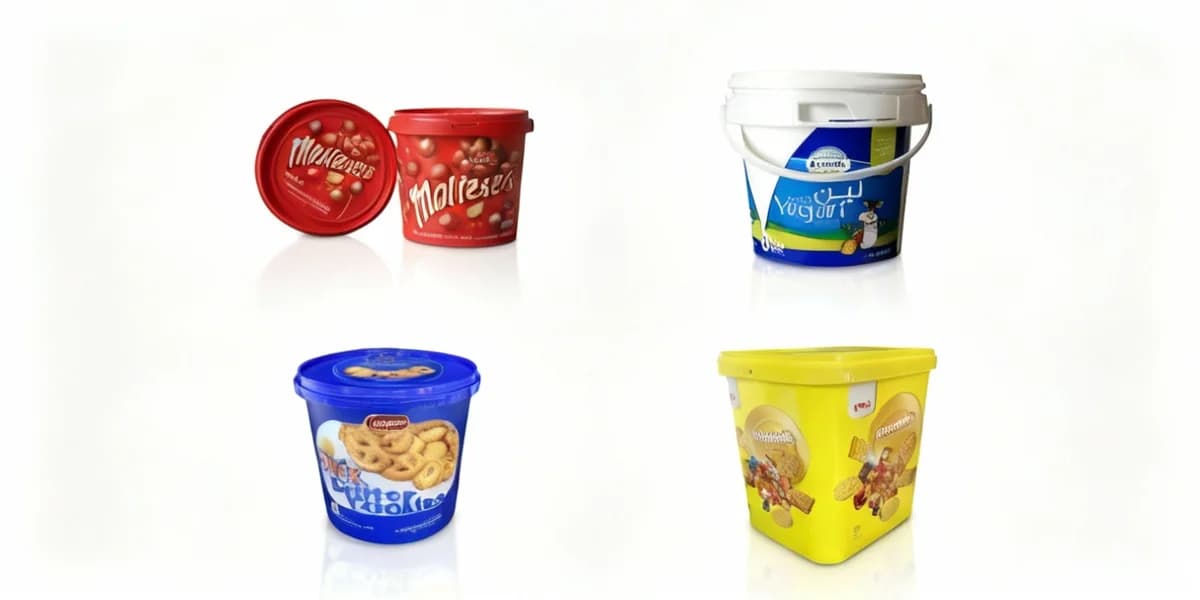
IML decorated pails — premium shelf presentation
Need Expert Advice?
Talk to our engineers about your specific production requirements. Free consultation.
HWAMDA Equipment for the Ethiopia Market
For Ethiopian yogurt pail production, HWAMDA recommends the SPV5-480 (4,800 kN clamping force) with 4-cavity molds for 1 to 2-liter pails and the SPV5-550 (5,500 kN) with 2-cavity molds for larger formats. The SPV5-480 produces 2-liter yogurt pails at 30 to 35 grams with 0.6 mm wall thickness, achieving 8 to 10 second cycle times for 1,440 to 1,800 pails per hour. The servo-hydraulic drive consumes 1.0 to 1.2 kWh per kilogram, critical in Ethiopia where industrial electricity costs approximately USD 0.04 per kWh but availability can be intermittent. HWAMDA recommends backup generator integration for uninterrupted production in areas with grid instability. The machine's robust hydraulic system tolerates voltage fluctuations of plus or minus 10% without performance impact. For the Ethiopian market, HWAMDA typically configures the line without IML initially, focusing on plain pails with printed shrink-sleeve labels to minimize capital investment, with IML upgrade capability built into the machine specification for future conversion as the market matures. The INOVA controller provides intuitive operation suitable for workforce training programs common in Ethiopian manufacturing startups.
Logistics and After-Sales Support
HWAMDA ships to Ethiopia via ocean freight from Ningbo to Djibouti port, with transit times of 18 to 22 days. Inland transport from Djibouti to Addis Ababa takes 3 to 5 days via the Addis Ababa-Djibouti Railway or truck convoy. HWAMDA coordinates with experienced China-Ethiopia freight forwarders who handle the ECAE conformity assessment and customs clearance processes. The company has established partnerships with machinery agents in Addis Ababa who provide installation, commissioning, and operator training in English and Amharic. Given Ethiopia's developing spare parts logistics, HWAMDA ships an enhanced starter spare parts package with the initial machine delivery, covering 12 to 18 months of anticipated wear items. Remote diagnostics via the INOVA controller are possible where internet connectivity is available, with backup phone-based technical support from HWAMDA engineers. HWAMDA provides 12-month warranty from commissioning and recommends establishing a relationship with the local agent for ongoing preventive maintenance support.
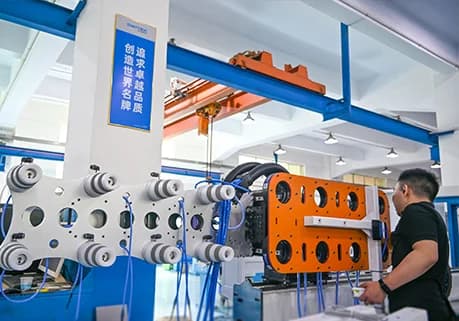
SWITEK IML robot arm with label placement system
Getting Started: Investment and ROI
A complete HWAMDA yogurt pail line for the Ethiopian market, including the SPV5-480 machine, 4-cavity mold (without IML for initial deployment), and auxiliaries, represents a total investment of USD 160,000 to 250,000 CIF Djibouti, plus approximately USD 8,000 to 12,000 for inland transport to Addis Ababa. Industrial park tenants import duty-free, while EIC-permitted manufacturers outside parks also qualify for exemptions. Production cost per 2-liter yogurt pail runs approximately USD 0.06 to 0.09 including imported PP at approximately USD 1,500 per metric ton, energy at USD 0.04 per kWh, labor (which is very competitive in Ethiopia), and mold amortization. Market selling prices of USD 0.12 to 0.20 per pail support gross margins of 40 to 55%. Ethiopia's low labor and energy costs create particularly favorable production economics. At 85% capacity utilization, a single line generates monthly revenue of approximately USD 55,000 to 100,000. Most Ethiopian operators achieve full return on investment within 14 to 22 months. Development finance institutions including the IFC and AfDB offer concessional financing for Ethiopian manufacturing projects that can complement HWAMDA's standard payment terms.
Frequently Asked Questions
Yes, HWAMDA provides comprehensive training for operators at all experience levels. For Ethiopian startups, training includes basic injection molding principles, machine operation, mold changeover procedures, quality inspection, and preventive maintenance. Training is conducted during the 5 to 7 day commissioning period by HWAMDA engineers with the local Addis Ababa agent providing Amharic translation. Extended training programs of up to 2 weeks can be arranged at HWAMDA's Ningbo factory for management and senior technical staff.
Related Guides
Ready to Start Your Project?
Get a free consultation and quotation for your thin-wall packaging production line.
Join 500+ manufacturers in 60+ countries who trust HWAMDA.
Get Free Quote